
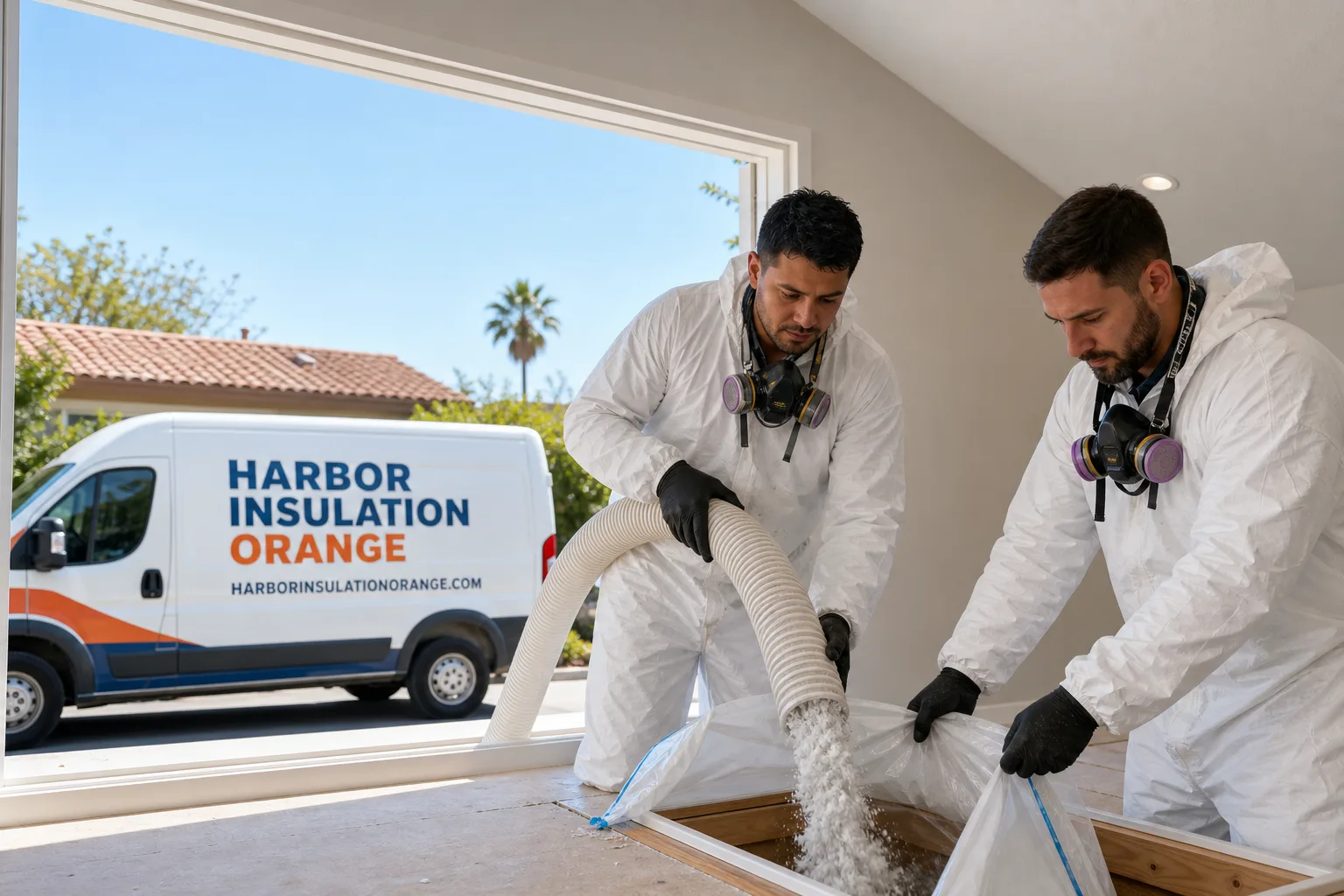
Fast, Reliable Attic Insulation Across Brea
Attic insulation in Brea typically costs $1,400 to $3,600 for a full replacement in a standard 1,200 to 1,800 square foot home, with top-ups running considerably less at $600 to $1,400. Most jobs are completed in a single day, and we respond to service calls throughout Brea within 24 to 48 hours. If your attic is holding heat, your cooling bills are climbing, or certain rooms just never hold temperature in the summer, call Noel at (657) 530-5638 for a free estimate. We’re in Orange, we know Brea’s tract-home stock intimately, and the owner is the one who shows up to do the work every time.
Why Harbor Insulation Orange Is Brea’s Preferred Attic Insulation Company
Brea homeowners call us because they’ve either been burned by a low-bid subcontractor crew or they’ve finally hit their limit with a second-story bedroom that won’t drop below 80°F in July. What they get with us is different. Noel Ibarra runs every Brea job personally, from the initial attic inspection to the final inch of blown-in material. No sales rep hands the work to a crew he’s never met. The person who quotes the job is the person on the ladder installing it. That accountability matters in Brea, where pre-1985 tract homes hide decades of compressed insulation and unsealed bypasses that a rote bid won’t catch.
We’ve pulled back attic hatches in neighborhoods off Lambert Road, Birch Street, and throughout the Brea Hills developments. The condition of what we find determines the recommendation. Sometimes it’s a straightforward Attic Insulation top-up over existing fiberglass. Other times the original R-13 batts are so matted and compacted around HVAC runs that full removal and replacement is the only honest fix. We audit before we recommend. That’s not a slogan; it’s how we avoid installing fresh material over a compromised thermal envelope.
For Brea specifically, response matters. We schedule insulation work in this city within 24 to 48 hours of the estimate. Summer is Brea’s real test, when 100°F afternoons expose every gap in a home’s envelope, and we keep a tight service window because we know an oven-hot attic isn’t a wait-til-next-month problem. Licensed and insured, with material partnerships across Owens Corning, Johns Manville, Knauf, Rockwool, CertainTeed, Icynene, Demilec, and GreenFiber, we choose the right product for your home’s specific situation rather than whatever happens to be overstocked at the warehouse.
Our Attic Insulation Services in Brea
Every home’s attic is different, but in Brea there are patterns. Most calls we field fall into one of these four categories. Here’s how we handle each one.
Blown-In Attic Insulation
Blown-in is the workhorse solution for Brea’s wood-frame tract homes because it fills irregular joist bays and settles cleanly around ductwork, plumbing, and electrical runs. We typically install Owens Corning AttiCat or GreenFiber cellulose, blowing deep to meet or exceed the Title 24 R-38 minimum this inland CEC climate zone now requires. For a typical Brea attic with open access, blown-in installation takes one day and immediately changes how the house feels by late afternoon.
Attic Batt Insulation
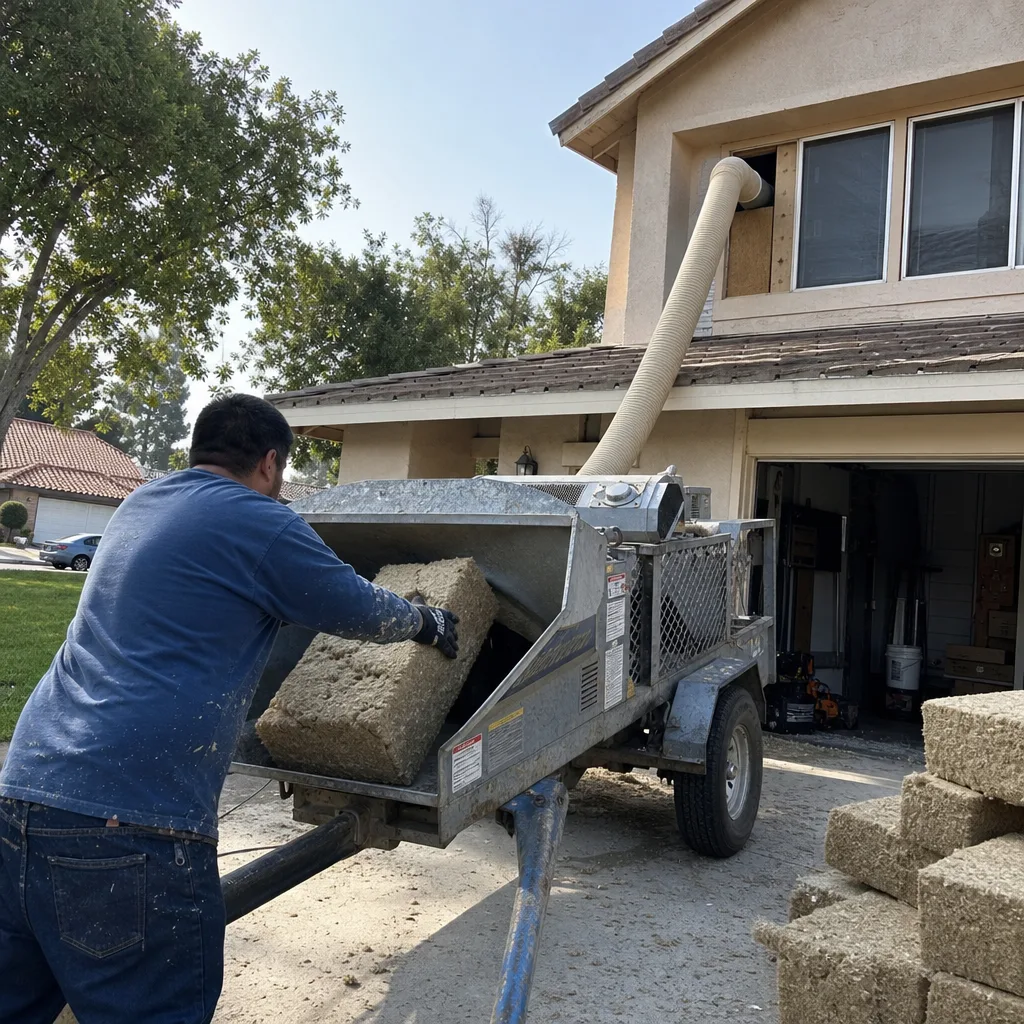
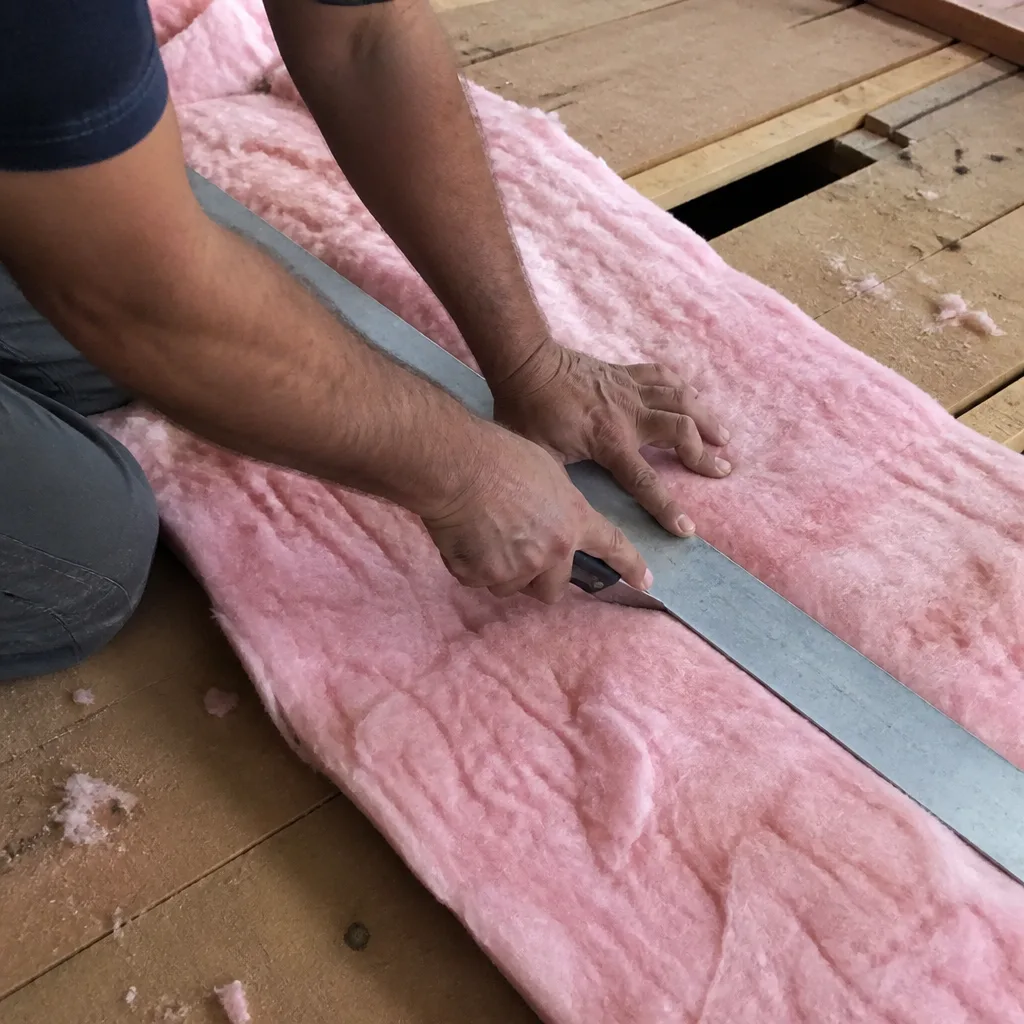
Batt insulation makes sense in Brea attics where the joist layout is clean and accessible, or where access hatches are tight enough that a blower hose becomes unwieldy. We use Knauf or Johns Manville fiberglass batts, cut precisely to width so there are no code-fail gaps at the edges. In some older Brea homes, batts are the right replacement product when the original material was a thin, compressed batt that never met code even when new.
Attic Insulation Top-Up
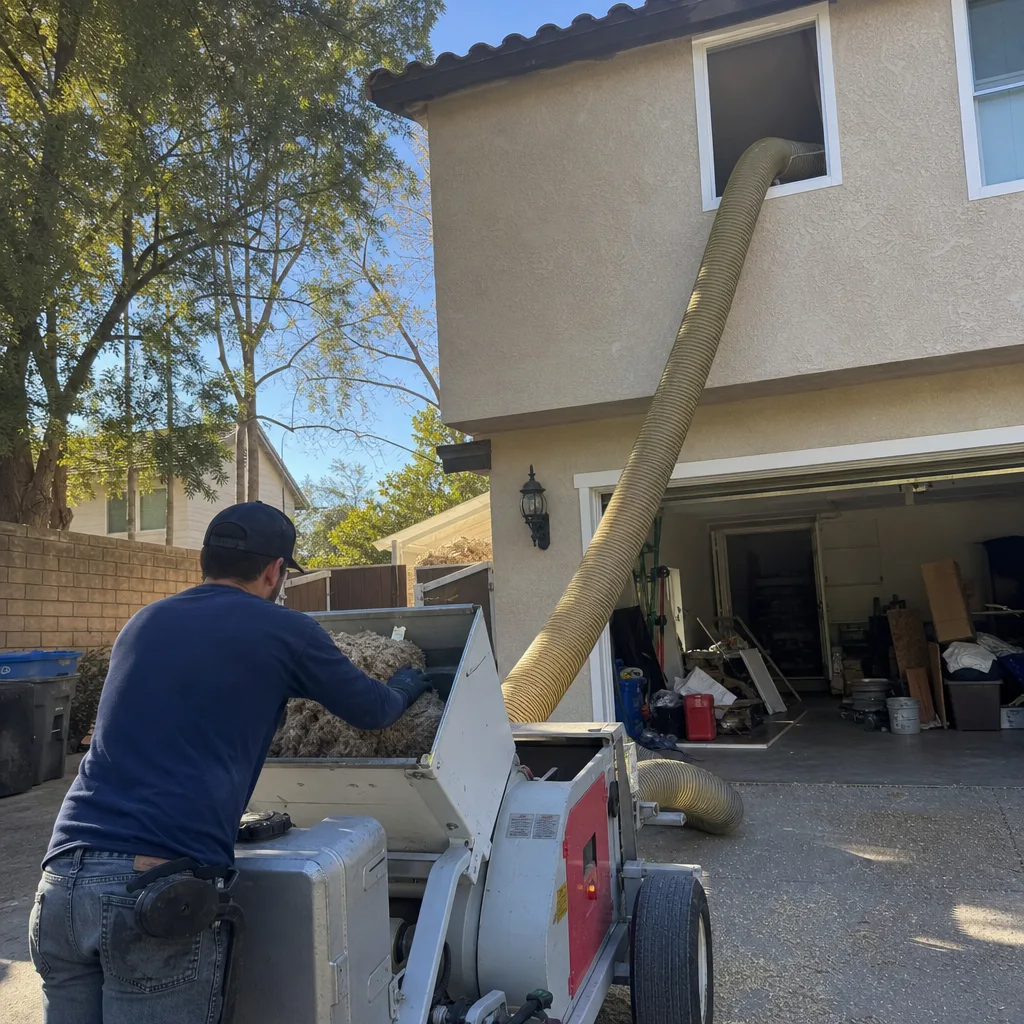
If your Brea attic already holds 4 to 6 inches of loose fiberglass and the material is dry and relatively uncompressed, a top-up is the most cost-effective route to R-38. We blow new material directly over the old, but not before checking for the real culprits: unsealed top plates, recessed can lights venting directly into the attic, and blocked soffit vents. A top-up without baffles and air sealing is only half the fix. For Brea’s pre-1985 homes, this is the most common service we quote, typically running $600 to $1,400 depending on square footage and current depth.
Attic Insulation Replacement
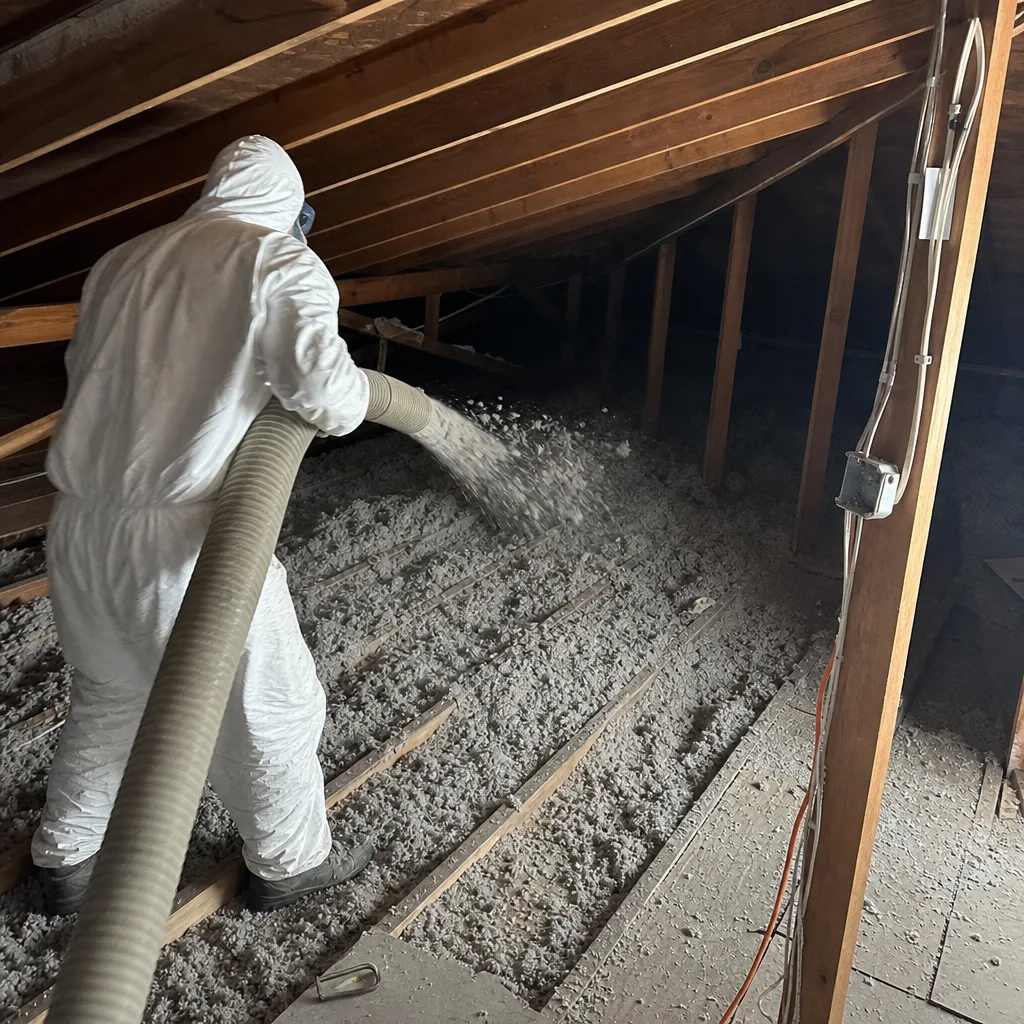
Replacement is what Brea’s 1962 to 1985 tract blocks usually need. The original builder-installed fiberglass has spent decades absorbing heat, dust, and the occasional rodent intrusion. It’s compressed to R-10 or less in traffic areas around HVAC equipment. We remove the old material completely, address any air sealing at the top plates and penetrations, install new baffles, and blow in fresh insulation to R-38 or beyond. In Brea, a full replacement on a 1,500 square foot attic typically runs $1,800 to $3,600, including removal and disposal.
What happens when you call
- 1
A real person answersNo phone trees — you reach a local pro.
- 2
You get an upfront price rangeHonest numbers before anyone is dispatched.
- 3
A background-checked tech heads outLicensed & insured, dispatched right away.
- 4
You approve before work beginsNothing starts until you say go.
Trusted Brands We Service in Brea
We stock and install material from eight manufacturer partners, which matters more than most homeowners realize. Brea’s inland heat profile rewards certain products over others. Demilec’s closed-cell foam delivers unusual R-value per inch for tight attic applications and air-seals simultaneously. GreenFiber’s cellulose excels in older attics where the material needs to settle naturally into odd cavities. Owens Corning’s AttiCat system dominates our blown-in installs because of its consistency and coverage. We’re not locked into one brand. We select based on your attic’s ventilation, framing, and moisture profile, and we keep material staged for Brea jobs so calls off Imperial Highway or near Brea Canyon get the right product without warehouse delays.
Common Attic Insulation Problems We See in Brea Homes
- Compressed original fiberglass in pre-1985 tract homes. Brea’s core neighborhoods off Lambert and Birch were built with 3 to 4 inches of blown fiberglass, roughly R-11 to R-13. Decades of foot traffic around HVAC runs have compressed that to R-10 or worse, and on 100°F days the attic simply cooks the ceiling below.
- Santa Ana pressure-driven air leaks through bypasses. When Santa Ana winds hit Brea, they push attic air through every unsealed penetration like a bellows. Recessed can lights and top-plate gaps stream 90°F attic air into bedrooms, while also pulling fiberglass dust into living spaces. Air sealing is the counterpart to insulation, not an add-on.
- Uninsulated attic hatches acting as thermal holes. Most Brea homes built before 1985 have a plain plywood hatch with no insulation and no weatherstripping. It’s a two-by-three-foot hole in your ceiling that lets conditioned air escape directly into a 140°F attic. We insulate and seal hatch access on every job where the homeowner hasn’t already addressed it.
- Blocked or missing soffit baffles choking ventilation. Brea summers push attics past 135°F routinely. If the original builder skipped baffles, or the existing ones are crushed by insulation, the ridge vents and soffit vents can’t create airflow. Heat builds and radiates downward. Adding baffles before a top-up or replacement is standard practice for us in this city.
Pricing for Attic Insulation in Brea, CA
Here’s what we quote in Brea’s market right now. A top-up over existing material runs $600 to $1,400 for most single-story tract homes. Full replacement, including removal and disposal of old insulation, runs $1,800 to $3,600 depending on attic square footage and condition. Homes in Brea Hills with vaulted ceilings or limited attic access land at the higher end. What drives cost is square footage, depth required for R-38, access difficulty, and whether air sealing and baffle work are included. We quote all of this upfront, in writing, before any material arrives. Estimates are free. Call (657) 530-5638 and we’ll schedule a time to inspect your attic properly.
We Also Serve Cities Near Brea
Our service area covers the communities around Brea, including La Habra, Placentia, Yorba Linda, and Villa Park. Whether you’re in a 1970s tract home near La Habra’s border or a newer hillside build in Villa Park, the same standards apply: owner-installed work, real diagnostics first, and materials picked for your attic’s specific conditions. If you’re searching for Attic Insulation in Brea or the surrounding area, you’ve found the contractor who actually shows up and does the work.
Serving Brea, CA — Our Local Coverage Area
We’re based in the Brea area and know this community well. Use the map below to see our service coverage — if you’re nearby, we can almost certainly help.
FAQs — Attic Insulation in Brea
Because they predate California’s modern energy code. Brea’s tract boom from 1962 to 1985 happened when builders met minimal thermal requirements, and the original blown fiberglass or thin batts were considered acceptable at the time. Title 24 now mandates R-38 minimum in this climate zone, which means most pre-1985 Brea homes are running at roughly a third of current code. Call (657) 530-5638 and we’ll measure exactly what’s up there.
It slows heat transfer from the attic into your living space. On a 100°F Brea afternoon, an underinsulated attic hits 130 to 140°F, and that heat radiates down through the ceiling all day and night. Getting the attic to R-38 cuts that radiant load dramatically, which means your AC doesn’t cycle as often and second-story rooms hold temperature instead of spiking by 3 or 4 degrees. We routinely see cooling loads drop 30 to 40% in Brea after a proper upgrade.
It depends on the material’s condition. If it’s dry and not heavily compressed, a top-up is the economical route to R-38. If it’s matted, dusty, pest-damaged, or compressed around the HVAC equipment to R-10 or less, replacement is the honest fix. We diagnose the difference in our attic audit and never recommend removal just to raise the price. In Brea’s heat, replacement usually wins because the original builder material is simply exhausted.
Yes, in most pre-1985 Brea homes. Baffles keep insulation from blocking soffit vents, which are what feed air up through the ridge vent. Without baffles, new insulation plugs the intake vents, attic ventilation stops, and heat builds even faster than before. We include baffle installation on top-ups and replacements as standard practice, because skipping them in Brea’s summer heat turns an upgrade into a downgrade.
They’re often the single most effective fix. Second-story bedrooms sit directly under the attic, and in Brea’s 100°F afternoons, an R-11 attic means that ceiling is radiating heat into the room from noon until after midnight. Upgrading to R-38 with proper air sealing and baffles flattens that temperature spike more effectively than adding window units or cranking the AC. It’s the highest-ROI comfort improvement for Brea’s two-story tract homes.
Written by Noel Ibarra, Owner & Lead Installer at Harbor Insulation Orange, serving Brea and the surrounding north Orange County communities.