
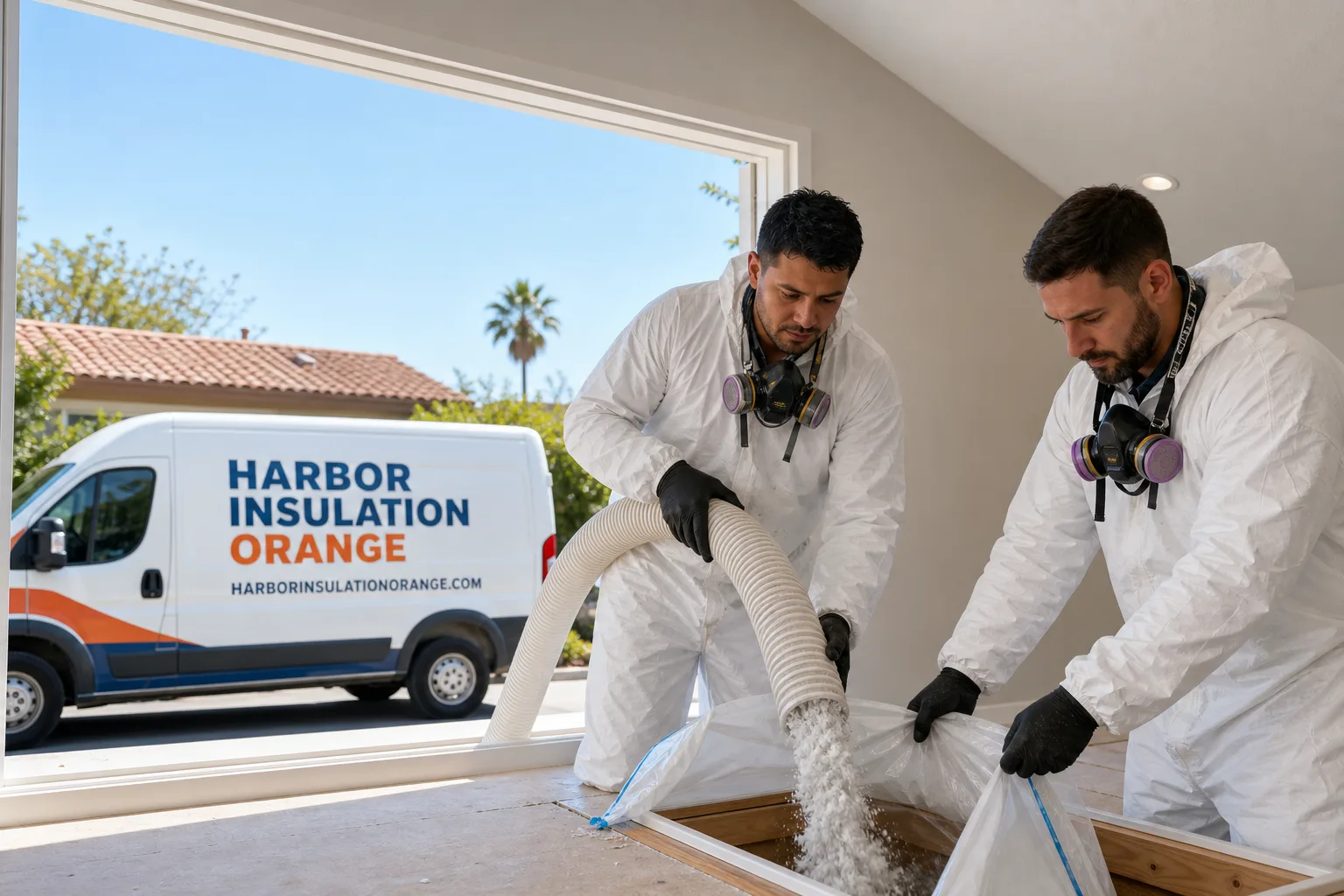
Trusted Radiant Barrier Installation for Orange Homeowners
Radiant barrier installation in Orange cuts attic temperatures by up to 30 degrees in peak summer, which directly reduces the heat that bleeds into your living space and forces your AC to run longer. We install radiant barriers in attics across Orange every week during the hot months, and the difference shows up on the next energy bill. Noel Ibarra, owner and lead installer, handles every radiant barrier job personally, from the initial attic inspection to the final staple and seam check. If your upstairs rooms run 8 to 10 degrees warmer than the rest of the house, a radiant barrier is likely part of the fix. Call (657) 530-5638 for a same-week attic assessment.
What Our Radiant Barrier Installation Service Includes
Radiant barrier work in Orange breaks into four distinct applications. Not every home needs all four, and part of what we do during the initial attic walk is determine which approach will actually move the needle for your specific roof orientation and duct layout.
Attic Radiant Barrier
The attic radiant barrier is the workhorse application for most Orange homes. We install a reinforced foil laminate directly against the underside of your roof decking, stapled to the rafters with an air gap maintained between the foil and the roof sheathing. That air gap is what makes the physics work: the foil reflects radiant heat back toward the roof rather than absorbing it and re-radiating it into the attic air. Without that gap, the material just conducts heat through contact and you lose most of the benefit. Harbor Insulation Orange measures and cuts every run to fit your specific rafter spacing, and we pull foil tight enough that it won’t sag or flap when attic ventilation moves air through the space.
Radiant Barrier Foil
Radiant barrier foil is the material itself, and it’s worth understanding the difference between product grades before anyone installs it in your attic. We install double-sided reinforced foil with a woven polyethylene core, which resists tearing during installation and holds up for decades in the heat of an Orange summer attic. Cheaper single-layer foils tear at the staple line within a few years and end up drooping off the rafters doing nothing. The reinforced product we use costs more per square foot but installs tighter, lasts longer, and actually delivers the emissivity rating printed on the label. For homes with complex roof geometry or tight rafter bays, we’ll sometimes recommend a perforated foil to allow proper moisture vapor transmission.
Radiant Barrier Roof Deck
Radiant barrier roof deck installation means covering the entire sloped plane of the roof from inside the attic, working bay by bay from the peak down to the top plate. This is the most labor-intensive application and the one that delivers the most dramatic surface-area coverage. In Orange homes with a traditional vented attic, covering the roof deck leaves the attic floor insulation untouched while blocking the primary heat source: the sun beating down on the roof sheathing. We see roof surface temperatures above 150 degrees on August afternoons here, and a properly installed radiant barrier keeps most of that energy out of the attic cavity. The work is dusty, hot, and physically demanding, which is exactly why Noel handles it himself rather than handing it to a crew that’s being paid by the square foot to rush.
Radiant Barrier & Ventilation
A radiant barrier only works as part of a functioning attic ventilation system. If your soffit vents are blocked by old blown-in insulation or your ridge vent is undersized, the attic becomes a stagnant heat trap regardless of what foil you staple to the rafters. When we install a radiant barrier in Orange, we check intake and exhaust ventilation as part of the job and flag any airflow problems before we start stapling. We’ve opened attics in neighborhoods like Santiago Hills where decades-old blown fiberglass had completely buried the soffit channels, turning the attic into a pressure cooker. In those cases, fixing the ventilation first makes the radiant barrier work dramatically better. The two systems depend on each other.
What happens when you call
- 1
A real person answersNo phone trees — you reach a local pro.
- 2
You get an upfront price rangeHonest numbers before anyone is dispatched.
- 3
A background-checked tech heads outLicensed & insured, dispatched right away.
- 4
You approve before work beginsNothing starts until you say go.
Brands We Service for Radiant Barrier Installation
Most radiant barrier failures we see in Orange attics come down to two things: the wrong material for the climate or an installation that ignored the basic physics of how reflective insulation works. We install radiant barrier products from manufacturers we’ve worked with since day one, and we’re selective about which materials we’ll put our name on.
We regularly install radiant barrier products manufactured to specification and compatible with Owens Corning and Johns Manville insulation systems. That compatibility matters when you’re layering a radiant barrier over existing attic floor insulation or planning to add more blown-in later. A radiant barrier installed by someone who doesn’t understand how it interacts with the rest of your thermal envelope can trap moisture against the roof sheathing and create condensation problems that didn’t exist before. That’s exactly the kind of mistake we find in attics where a previous contractor threw up radiant barrier as a quick upsell without checking the ventilation first.
For homes where spray foam is part of the envelope strategy, we coordinate radiant barrier work with open-cell and closed-cell systems from Icynene and Demilec. These are different tools that solve different problems: spray foam seals and insulates conductive and convective heat transfer, while radiant barrier blocks radiant heat gain through the roof deck. In vaulted ceiling assemblies where there’s no traditional attic cavity, we’ll sometimes recommend one approach over the other based on what the roof assembly can actually support. Whether you already have any of these products in your home or you’re starting from bare rafters, we’ll recommend the right material for your specific attic.
Signs You Need Radiant Barrier Installation Right Now
Orange summer heat has a way of making attic problems impossible to ignore. If you’re noticing any of the following, a radiant barrier is likely overdue.
- Upstairs rooms run 8 to 10 degrees hotter than downstairs. Heat loads through the roof are the primary driver of second-story temperature gain. When the attic hits 130 degrees, that heat radiates through the ceiling insulation into your upstairs bedrooms, and your AC system has to fight it all afternoon. A radiant barrier attacks the problem at the source instead of forcing your HVAC to outrun it.
- Your AC runs constantly between 2 p.m. and 7 p.m. during summer. That afternoon window is when solar gain on the roof is at its peak, and it’s the exact period a radiant barrier is designed to address. We’ve had Orange homeowners tell us their AC cycled continuously all afternoon before installation, then finally shut off for real intervals after the foil went up. The thermal load reduction shows up in runtime data, not just comfort.
- Attic insulation is doing its job but your cooling bills still climb every year. Attic floor insulation slows conductive heat transfer, but it does almost nothing against radiant heat gain. Radiant energy passes straight through a 130-degree attic and heats the top surface of your insulation, which then radiates downward into the home. If your insulation is in good shape but your bills keep rising, the missing layer is reflective.
- Your air handler or ductwork lives in the attic. Ducts sitting in a 140-degree attic pick up heat through their walls, meaning the air coming out of your vents is warmer than it was at the air handler. A radiant barrier lowers ambient attic temperatures by 20 to 30 degrees, which reduces duct heat gain and makes your existing HVAC system more efficient without touching the equipment. Older Orange homes with attic ductwork benefit disproportionately here.
- The roof sheathing or rafters show signs of heat stress. Discoloration, warped decking, or roofing shingles that have failed prematurely on the south and west exposures are all indicators of extreme attic heat. Radiant barrier won’t undo existing damage, but it will slow the rate of future degradation and lower peak attic temperatures enough to extend the life of your roof.
Our Radiant Barrier Installation Process – Step by Step
Radiant barrier installation in Orange is not a one-size-fits-all staple job. Here’s how we approach every attic we work in.
- 1
Attic assessment and ventilation check. Before we quote anything, we get into the attic and look at the roof assembly, rafter spacing, existing insulation, ductwork, and ventilation intake and exhaust. Noel does this himself, which means the person quoting your project is the same person who’ll be installing it. We’ll check whether your soffit vents are clear, whether you have adequate ridge or gable venting, and whether there’s any existing moisture damage that needs to be addressed before we seal anything up.
- 2
Material selection based on your specific attic. We choose between solid or perforated radiant barrier based on your climate zone, roof pitch, and ventilation setup. For most vented attics in Orange, perforated foil is the right call because it allows moisture vapor to move upward and out instead of trapping it against the sheathing. For non-vented or closed attic designs, we’ll work within the limits of what the assembly can safely accommodate.
- 3
Preparation and existing insulation adjustment. If we’re installing over existing attic floor insulation, we’ll check depth and condition and note any areas that have compacted or been disturbed by pests. We’ll also clear any debris from the rafter bays so the foil has a clean surface to fasten against. If attic air sealing is part of your project, we’ll coordinate that work at this stage so seams are sealed before we put the radiant barrier up.
- 4
Installation to full rafter coverage. We start at the peak and work down, stapling the reinforced foil to the underside of the rafters at 6-inch intervals, maintaining a consistent air gap between the foil and the roof sheathing. We overlap seams by 2 to 4 inches and orient the overlap so any condensation that does form will drain downward rather than collecting. Every staple is placed to keep the material taut, and we cut around truss members and braces cleanly.
- 5
Final seam check and ventilation verification. After the material is up, we inspect every seam and staple line, then confirm that soffit and ridge ventilation is moving air the way it should. We’ll take before-and-after temperature readings in the attic so you can see the temperature delta in real terms. You’ll know exactly what the foil is doing before we pack up and hand the space back to you.
How Much Does Radiant Barrier Installation Cost in Orange?
What affects the price most is the geometry of your attic, not the material itself. Radiant barrier foil is relatively inexpensive. The labor is where the money goes, and labor hours go up quickly when a roof has multiple hips and valleys, when rafter spacing is uneven, or when an attic is crowded with ductwork and electrical lines. We quote every Orange project after walking the attic, not off square footage over the phone. A free estimate includes the physical inspection, ventilation check, and a firm written quote. You won’t get a surprise change order halfway through the job. Call (657) 530-5638 to schedule yours.
Radiant Barrier Installation Near Orange – Our Service Area
We install radiant barriers throughout Orange and the surrounding communities, including Villa Park, North Tustin, Tustin, Placentia, Yorba Linda, Brea, Fountain Valley, Stanton, Westminster, Buena Park, and La Habra. For standard attic radiant barrier projects in Orange proper, we can usually start within three to five business days of the initial assessment. Larger homes or projects that include home energy audit work may take a bit longer to schedule. If you’re in a neighborhood like Old Towne Orange or along the eastern edge of the city toward the hills, call us and we’ll give you a realistic timeline for your specific address.
Serving Orange, CA — Our Local Coverage Area
We’re based in the Orange Radiant Barrier Installation area and know this community well. Use the map below to see our service coverage — if you’re nearby, we can almost certainly help.
Frequently Asked Questions – Radiant Barrier Installation in Orange
What is radiant barrier installation?
Radiant barrier installation is the process of installing reflective foil material in your attic to block radiant heat gain from the sun before it can radiate into your home’s living space. The material works by reflecting up to 97% of radiant heat back toward the roof rather than absorbing it. In Orange, where summer attics routinely hit 130 degrees or more, that reflection can lower attic temperatures by 20 to 30 degrees and reduce the cooling load on your HVAC system. It’s not a replacement for traditional insulation; it works alongside attic floor insulation to address a different type of heat transfer.
How long does radiant barrier installation take?
Most standard attic radiant barrier installations in Orange take one day to complete. A 2,000 square foot home with a straightforward gable roof and clear rafter bays is typically a single working day from setup to final inspection. Complex roofs with multiple hips, steep pitches, or crowded attic conditions may stretch into two days. Attic access and interior attic temperatures also affect the timeline: during peak summer heat, we adjust our work schedule to start earlier in the morning for safety and pace the work accordingly.
How much does radiant barrier installation cost in Orange?
Radiant barrier installation in Orange costs $1.50 to $3.50 per square foot installed, with most complete attic projects landing between $2,200 and $6,000. Your specific cost depends on your roof’s geometry, rafter spacing, attic accessibility, and whether ventilation work or old insulation removal is needed alongside the barrier. We provide a fixed written quote after a physical attic inspection, so there are no surprises after the work begins. Call (657) 530-5638 for an exact quote for your home.
Do you install radiant barrier with Owens Corning or Johns Manville insulation?
Yes. We install radiant barrier systems that are fully compatible with Owens Corning and Johns Manville insulation products, and if your attic already has either brand in place, we’ll work around it carefully rather than disturbing what’s working well. The key is making sure the radiant barrier and the existing insulation work as one system without trapping moisture or blocking ventilation. Whether your attic has fiberglass batts, blown-in fiberglass, or no insulation at all, we’ll recommend the product that fits your specific setup.
Can you come out same day for radiant barrier installation in Orange?
In an emergency situation where heat has made an attic or upstairs living space unsafe, we prioritize same-day and next-day radiant barrier installation calls in Orange wherever our schedule allows. Heat emergencies are a real safety issue, and we don’t take them lightly. For standard residential projects, call us and we’ll give you our soonest available install window. The best way to know is to call (657) 530-5638 and describe your situation.
Is there a warranty on radiant barrier installation?
Yes, our radiant barrier installations are backed by a workmanship warranty, and the reinforced foil products we install carry their own manufacturer warranties on material performance. If your radiant barrier sags, tears at the staple line, or otherwise fails due to installation error, we’ll come back and make it right. The product warranties from the manufacturers we carry cover defects in the reflective material itself. We’ll explain both warranty layers in writing before we start so you know exactly what’s covered and for how long.
How should I prepare for my radiant barrier installation?
Clear a path from your garage or interior access point to the attic hatch or pull-down ladder, and move anything fragile away from the access area. If you have stored boxes or holiday decorations in your attic, we’ll work around them, but clearing a narrow path along the center walkway helps us move efficiently. We handle all floor protection and cleanup inside the home and in the attic. Expect some noise from the staple gun during the day, and keep small children or pets away from the work area during installation.
Schedule Your Radiant Barrier Installation Service in Orange Today
If your upstairs rooms have been running hotter than the rest of the house and your AC is working overtime, a professionally installed radiant barrier is one of the most cost-effective fixes available in the Orange climate. Call (657) 530-5638 and Noel will schedule your attic assessment, walk the space with you, and give you a straight answer on whether radiant barrier is the right move for your specific home. Estimates are free, the recommendation is honest, and if it’s not the right fit, we’ll tell you what is.
Written by Noel Ibarra, Owner at Harbor Insulation Orange, serving Orange since day one with owner-performed radiant barrier installation, attic diagnostics, and whole-home thermal envelope work. Curious about how much Radiant Barrier Installation costs?