
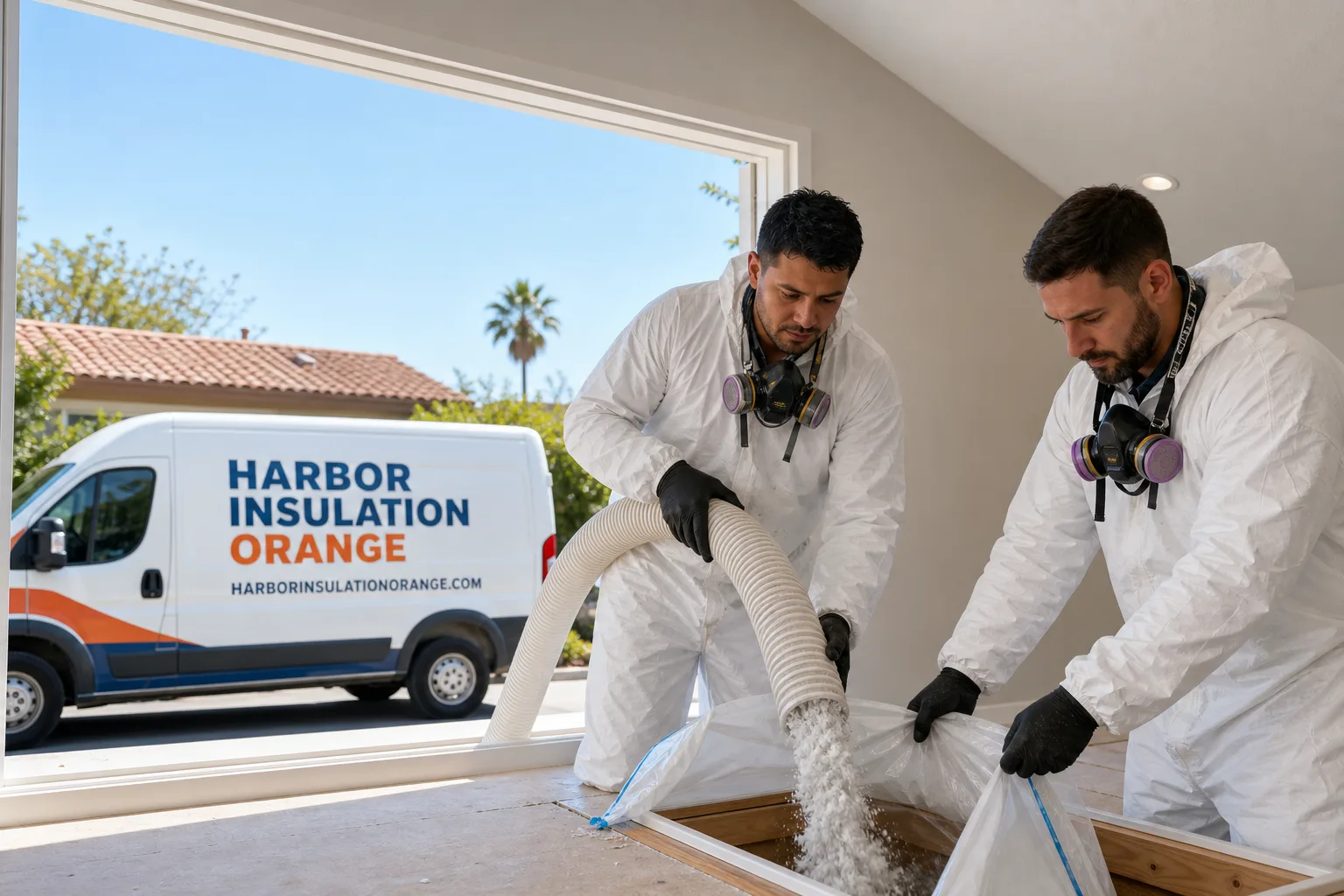
Fast, Reliable Crawl Space Encapsulation & Vapor Barrier Across Stanton
Crawl space encapsulation in Stanton usually costs $3,800–$8,900 for a full single-family home, with vapor barrier-only jobs running $1,700–$3,200 depending on square footage and access. Most Stanton jobs are completed in one to two days, and we can usually schedule within the same week you call. If you’re dealing with damp, musty air rising into your 1960s tract home or apartment, call us at (657) 530-5638 and we’ll give you a straight answer on what’s needed.
We know Stanton’s housing stock because we’ve worked under dozens of its stucco tract homes. The city’s residential buildout happened between 1955 and 1975, before Title 24 mandated vapor barriers in new construction. That means nearly every crawl space we open in Stanton has the same story: dirt floor, no barrier, settled fiberglass batts, and moisture that’s been wicking up into the living space for fifty years. No one should live above that.
Why Harbor Insulation Orange Is Stanton’s Preferred Crawl Space Encapsulation & Vapor Barrier Company
Most Stanton customers find us after a previous contractor either skipped their crawl space during an insulation job or installed a thin vapor barrier that tore within a year. Tight clearances and shallow crawl spaces are the norm here, and plenty of companies won’t do the hard work of properly lapping and sealing the barrier around piers and plumbing penetrations. We do.
The person who walks your crawl space, diagnoses the moisture problem, and writes your estimate is the same person who installs the system and seals every seam. Noel Ibarra runs every job directly. No subcontracted crew, no handoff to someone who wasn’t there for the diagnostic walkthrough. That matters when the work is happening in a 24-inch-high crawl space under a 1960s apartment building off Beach Boulevard, where access is through a side yard gate and the barrier has to be cut and fitted around decades of retrofitted plumbing and abandoned ductwork.
We arrive in Stanton prepared for what we already know we’ll find: pre-Title 24 construction, ground moisture, flat-roof runoff patterns, and tight clearances. That saves you time on diagnosis and means the install doesn’t stall out halfway through.
For a free estimate on crawl space encapsulation or a vapor barrier in Stanton, call (657) 530-5638.
Our Crawl Space Encapsulation & Vapor Barrier Services in Stanton
We handle the full Crawl Space Encapsulation & Vapor Barrier scope in Stanton, from a simple 10-mil vapor barrier to a fully conditioned, sealed crawl space. Four sub-services cover most of what Stanton homes need:
Crawl Space Vapor Barrier
This is the starting point for most Stanton work. We install a reinforced 10-mil or 12-mil barrier directly over the dirt floor, lapped up the foundation walls and piers, and sealed at every seam and penetration. In Stanton’s shallow crawl spaces, we take extra care around foundation anchors and access hatches, because those are where cheap installs fail within a season. A properly installed barrier stops ground moisture from evaporating upward into your floor joists and insulation.
Crawl Space Encapsulation
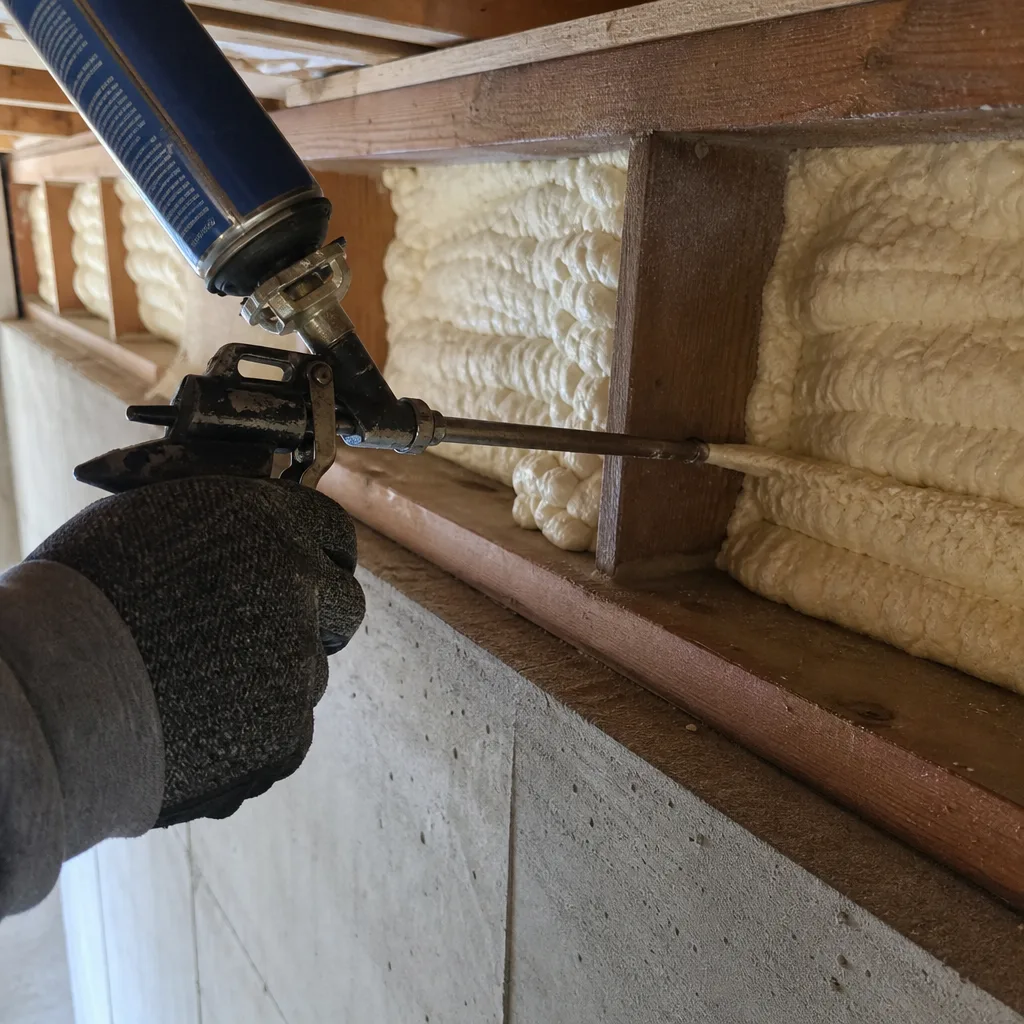
Encapsulation goes further than a vapor barrier: the entire crawl space is sealed, including the walls, rim joist area, and access door. We add a sealed vapor liner, insulate the perimeter walls, and in many Stanton jobs we size a commercial dehumidifier for the space because our inland heat and flat-roof runoff patterns keep ambient humidity high from June through October. The result is a crawl space that stays dry year-round, which means your floor insulation actually does its job.
Crawl Space Insulation
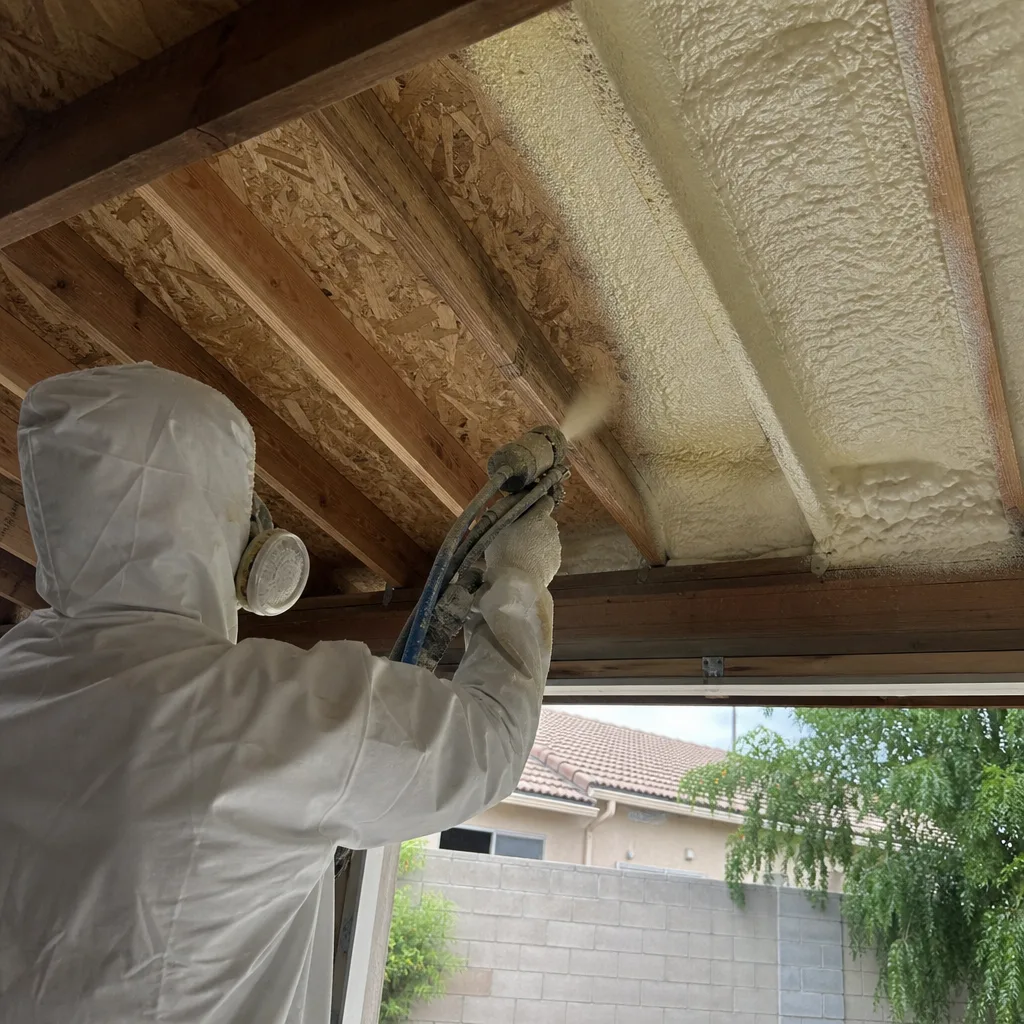
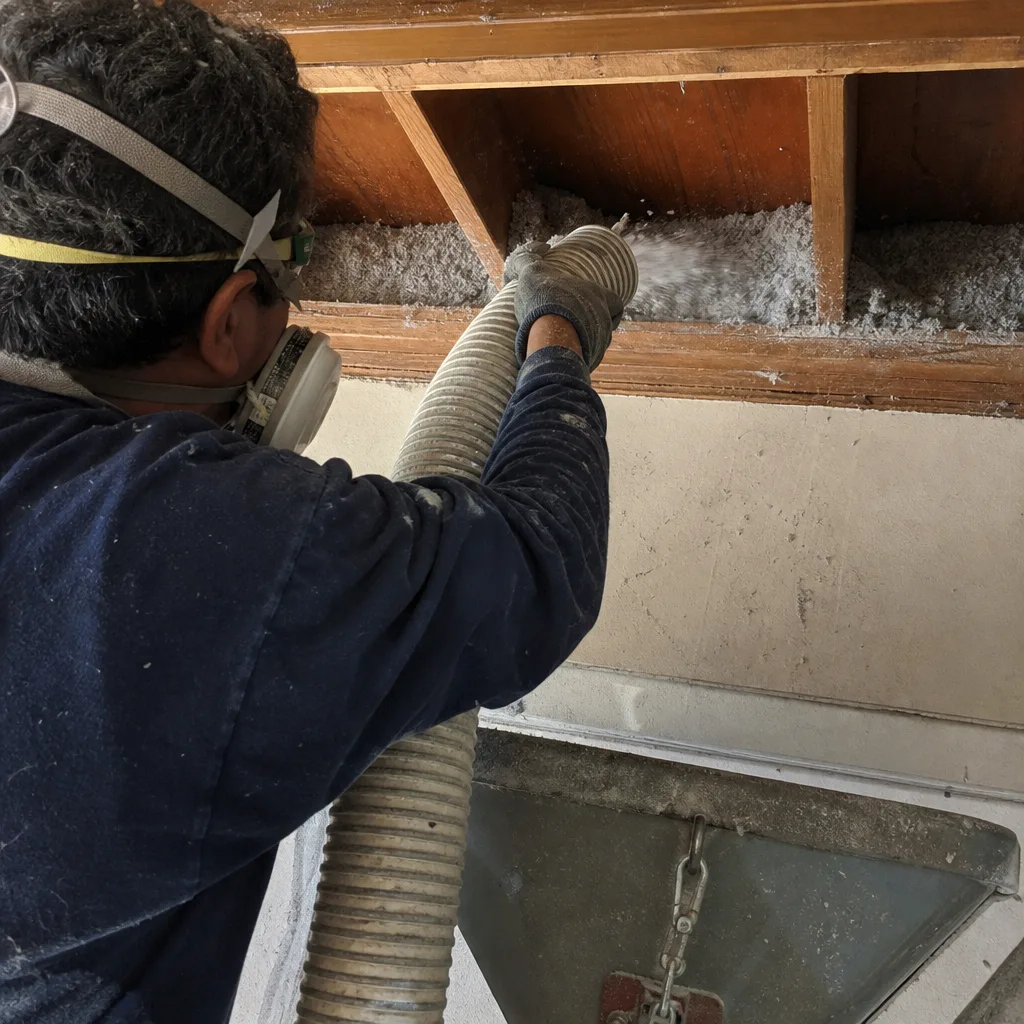
Most Stanton homes built between 1955 and 1975 have settled or deteriorated fiberglass batts in the crawl space ceiling. They hang loose, they’re saturated in some spots, and they’ve stopped performing. We remove and replace them with Owens Corning or Knauf batts, installed tight against the subfloor and supported so they won’t sag. When paired with a vapor barrier, this is the two-layer fix that stops both heat gain in summer and heat loss on those low-40s winter nights.
Crawl Space Moisture Control
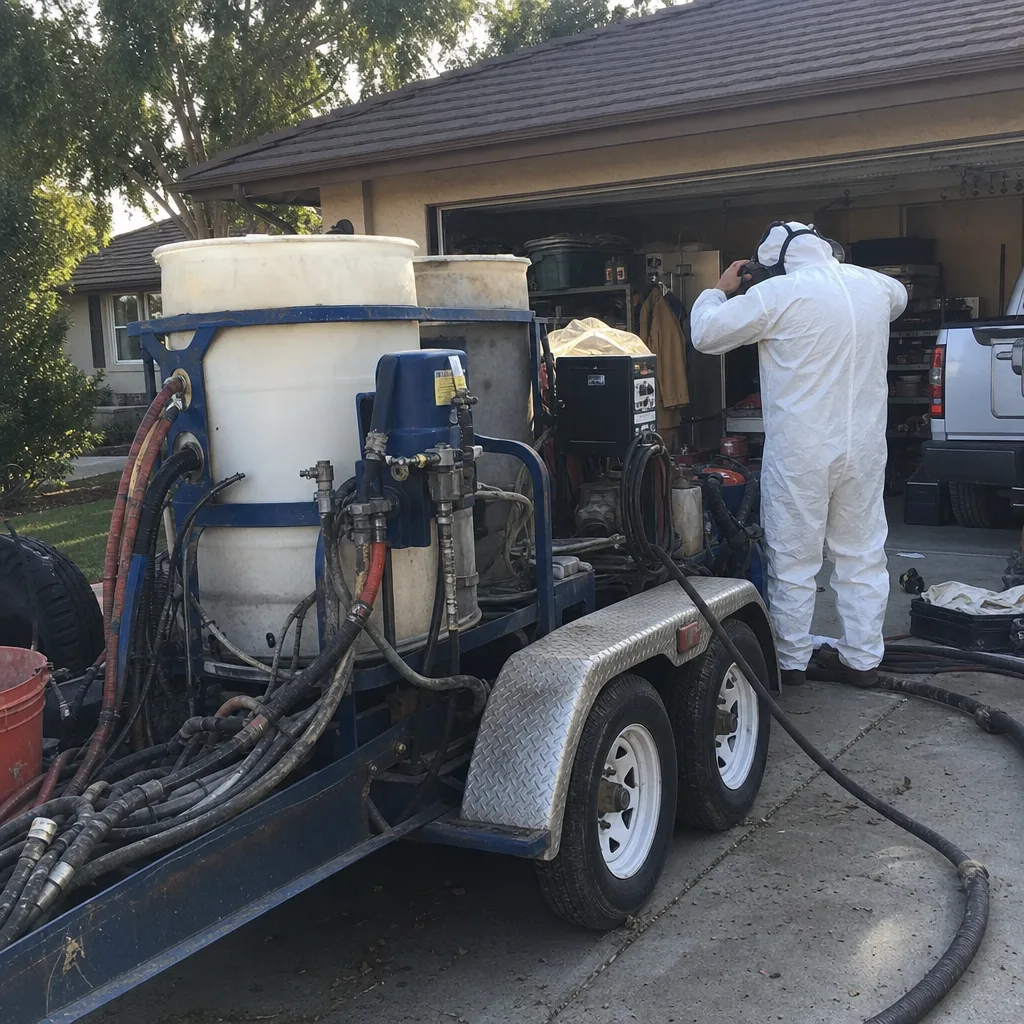
Moisture control means diagnosing where humidity is coming from and stopping it at the source. In Stanton, that often means assessing roof runoff from flat or low-slope apartment building roofs that dump water against foundation walls, or identifying unsealed crawl space vents that pull in humid afternoon air. We address drainage, seal penetrations, and size dehumidification correctly for the volume of the space, not the square footage of the floor above. It’s a different calculation and most people get it wrong.
What happens when you call
- 1
A real person answersNo phone trees — you reach a local pro.
- 2
You get an upfront price rangeHonest numbers before anyone is dispatched.
- 3
A background-checked tech heads outLicensed & insured, dispatched right away.
- 4
You approve before work beginsNothing starts until you say go.
Trusted Brands We Service in Stanton
We install materials from manufacturers we’ve verified over years of hands-on work: Owens Corning, Johns Manville, Knauf, and GreenFiber, among others. For Stanton’s crawl space work specifically, we typically use Owens Corning batt insulation paired with a reinforced 10-mil vapor barrier, because that combination holds up best in shallow, humid spaces with frequent access for plumbing and HVAC work. We stock standard sizes and barrier rolls in our Orange warehouse, which means we can typically start a Stanton job within a few days of your estimate instead of waiting on a special order.
Common Crawl Space Encapsulation & Vapor Barrier Problems We See in Stanton Homes
- Torn vapor barriers from tight clearances. Stanton’s pre-1975 crawl spaces often have 18 to 30 inches of clearance. A standard 10-mil barrier gets punctured on protruding foundation anchors or ripped during HVAC duct retrofits. We cut and seal around every obstruction rather than draping the barrier over them and hoping for the best.
- Flat-roof runoff saturating crawl space walls. Many of Stanton’s 1960s apartment buildings and some tract homes have flat or low-slope roofs that channel rainwater against foundation walls. Without a drainage plane and a properly lapped vapor barrier, that moisture wicks inward and soaks insulation batts. We address drainage at the foundation level before sealing the space.
- Unsealed access hatches breaking the encapsulation. Alley-load and townhome configurations put crawl space access through side yards or behind gates. We regularly find access doors that were never sealed during a previous encapsulation job, which reintroduces humid air and defeats the entire system. We seal the hatch and extend the barrier underneath it.
- Blackened, sagging fiberglass batts from decades of humidity. Original insulation in Stanton crawl spaces has been absorbing moisture since the Johnson administration. By the time we open the access, the batts are often black, compressed, and falling away from the subfloor. They need removal and replacement, not covering over.
Pricing for Crawl Space Encapsulation & Vapor Barrier in Stanton, CA
Here’s what you can expect to pay for work in Stanton’s market:
- Vapor barrier only (10-mil reinforced): $1,700–$3,200 for a typical 1,000–1,800 sq. ft. crawl space.
- Vapor barrier + crawl space insulation replacement: $3,200–$5,800, depending on insulation type and how much old material needs removal.
- Full encapsulation (barrier, wall liner, rim joist seal, access door sealing): $5,000–$8,900 for most Stanton single-family homes.
- Add-on dehumidifier (sized for tight, shallow crawl spaces): $1,100–$2,400 installed.
Your actual price depends on square footage, clearance height, how much failed insulation we’re removing, and whether drainage corrections are needed at the foundation. We give you a written line-item estimate before any work starts, and every estimate is free. Call (657) 530-5638 to schedule a crawl space assessment in Stanton.
We Also Serve Cities Near Stanton
In addition to our work throughout Stanton, we serve Buena Park, Westminster, La Palma, and Fountain Valley. If you’re in a neighboring city and dealing with the same pre-Title 24 crawl space conditions, we can usually reach you just as quickly.
Serving Stanton, CA — Our Local Coverage Area
We’re based in the Stanton area and know this community well. Use the map below to see our service coverage — if you’re nearby, we can almost certainly help.
FAQs — Crawl Space Encapsulation & Vapor Barrier in Stanton
California’s Title 24 energy code, which mandated vapor barriers in new residential construction, took effect in 1978. Stanton’s housing stock was almost entirely built out between 1955 and 1975, right before that cutoff. So nearly every single-family home and apartment building in the city went up with a bare dirt crawl space and no moisture protection, and that condition persists unless a homeowner retrofits one. Call (657) 530-5638 if you want to know what’s actually under your house.
Stanton sits far enough inland that the marine layer burns off by midday and afternoons regularly hit 88–95°F from July through September. That heat drives more moisture out of the soil and increases the vapor pressure pushing into your crawl space. A vapor barrier in Stanton needs to be properly sealed at seams and penetrations or it will fail faster than it would in Huntington Beach or Seal Beach, where coastal temperatures stay milder. We size encapsulation systems for Stanton’s actual temperature and humidity profile, not a generic Orange County average.
Yes. Many of Stanton’s 4–8 unit apartment buildings have access hatches in tight side yards or behind locked gates, and the crawl spaces themselves often have less than two feet of clearance. Some contractors skip sealing the access door or don’t extend the barrier under the hatch, which breaks the encapsulation. We work around the access constraints, seal every hatch, and lap the barrier correctly under every opening.
In Stanton’s dense blocks of 1960s apartment buildings, many flat or low-slope roofs have only a few inches of original compressed fiberglass or no insulation at all between the top-floor ceiling and direct sun exposure. Add to that a crawl space below the building that’s dumping humidity upward through wall cavities, and the top-floor unit becomes an oven. Sealing and insulating the roof assembly plus correcting the crawl space below addresses the full thermal stack. Call us for an assessment at (657) 530-5638.
Yes, and it’s often the single most effective fix. In Stanton’s pre-1975 stucco tract homes, moisture rising from the dirt crawl space is the primary driver of indoor humidity, musty smells, and accelerated wood rot. A properly installed 10-mil reinforced barrier with sealed seams and pier wraps stops that moisture at its source. Many Stanton homeowners notice a measurable drop in indoor humidity within the first two weeks. Estimates are free, so call (657) 530-5638 and we’ll give you an honest read on what your home needs.
Get Your Stanton Crawl Space Assessed
If you live in a Stanton home built before 1975, the odds are high that your crawl space is unsealed, uninsulated, and actively pumping moisture into your living space. We’ll walk the space, show you what we find, and give you a line-item price for exactly what needs to be done. No pressure, no vague estimates. Call (657) 530-5638 to schedule a free assessment, or reach out through our contact page and we’ll call you back within one business day.
Written by Noel Ibarra, Owner at Harbor Insulation Orange, serving Stanton since the company’s founding.