
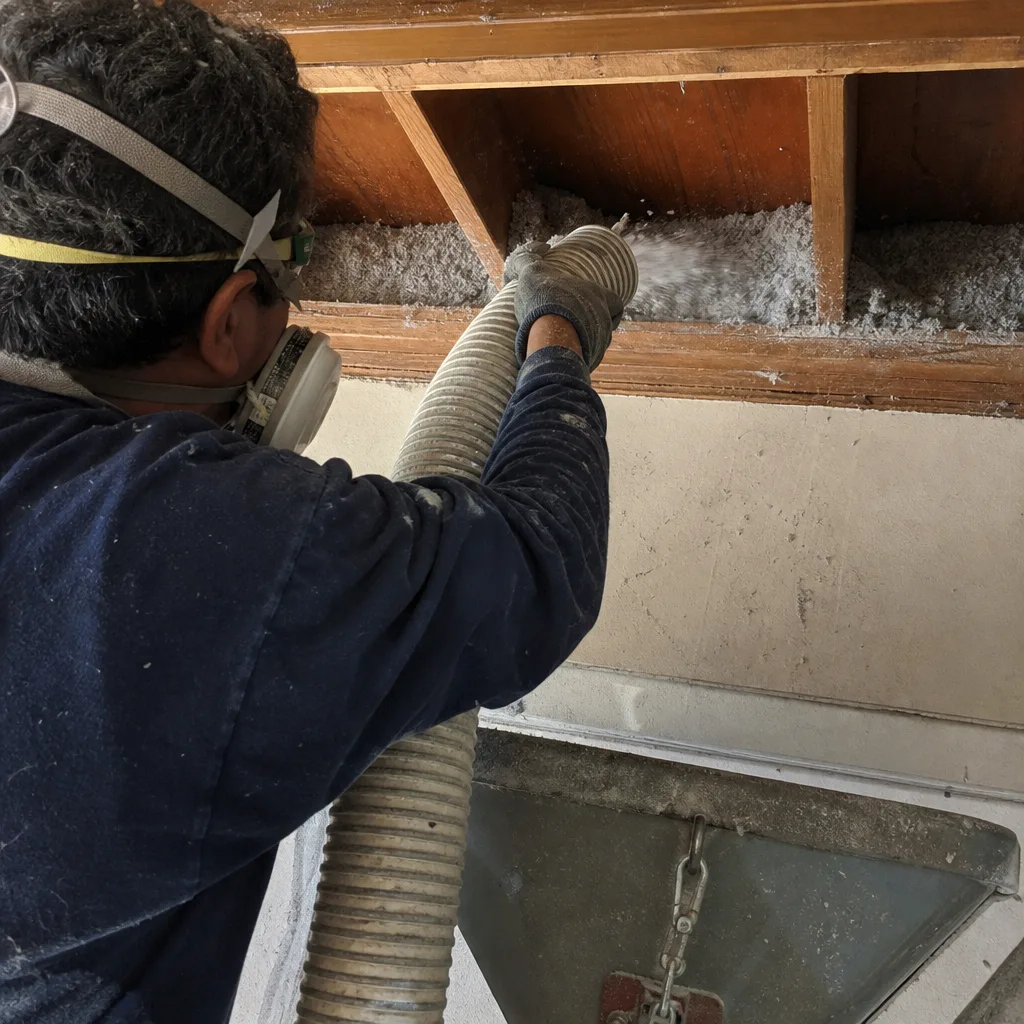
How Much Does Blown-In Insulation Cost in Orange?
Blown-in insulation in Orange, CA typically costs between $1,200 and $3,800 for a standard single-story home attic, with most Orange homeowners landing somewhere around $1,800 to $2,400 for a 1,200 to 1,500 square foot attic brought up to California’s recommended R-38 or R-49. The exact number depends on your current insulation level, the material chosen (fiberglass or cellulose), and whether old insulation needs to come out first. At Harbor Insulation Orange, we start with a home energy audit before recommending anything – because the right scope of work is the one your house actually needs, not the easiest one to sell.
Blown-In Insulation Cost Breakdown for Orange Homeowners (2026)
These ranges reflect real 2026 pricing in the Orange market. Labor, material costs, and local demand all factor in – and Orange’s aging housing stock (a lot of it built in the 1960s and 70s in neighborhoods like Cypress Street Barrio, Old Towne, and around Chapman Avenue) tends to present specific conditions that affect job scope.
| Service / Scope | Typical Price Range (2026) |
|---|---|
| Blown-in fiberglass, attic only (up to 1,000 sq ft, top-up) | $900 – $1,500 |
| Blown-in cellulose, attic only (up to 1,000 sq ft, top-up) | $800 – $1,350 |
| Blown-in fiberglass, attic (1,200 – 1,800 sq ft, full install to R-38) | $1,400 – $2,600 |
| Blown-in cellulose, attic (1,200 – 1,800 sq ft, full install to R-38) | $1,200 – $2,200 |
| Blown-in to R-49 (larger or two-story homes, 2,000+ sq ft attic) | $2,800 – $4,500 |
| Blown-in wall insulation (dense-pack, per linear foot of wall) | $3.50 – $6.00 per sq ft of wall |
| Old insulation removal before blown-in install | $800 – $2,200 (depending on volume and condition) |
| Attic air sealing added before blown-in | $400 – $900 |
| Full attic system: removal + air sealing + blown-in (avg. Orange home) | $2,800 – $5,500 |
A couple of things to keep in mind with these numbers: a top-up job assumes existing insulation is in acceptable condition. If your attic has old fiberglass batts that have compacted down to R-6 or R-8 – which is common in Orange homes built before 1980 – blowing more material over compromised insulation wastes money. That’s why we audit first. Air sealing before you blow in is also not optional if you want the installation to perform the way the R-value math promises. An unsealed attic with a lot of can lights and unsealed top plates – both extremely common in the Orange housing stock – will underperform by 30 to 40 percent regardless of how much material goes in.
For a free, no-pressure estimate on your specific home in Orange, call us at (657) 530-5638.
What Affects Blown-In Insulation Pricing in Orange
Orange isn’t a uniform market. Homes in the flat grid streets near The Village or around Katella differ meaningfully from hillside properties near Santiago Canyon Road or older craftsman bungalows in Old Towne. Here’s what moves the price up or down:
- Attic access and clearance: Tight access hatches, low ridge heights, and attics packed with HVAC ductwork all add labor time. Many 1960s-era Orange homes have attic clearance under 24 inches in sections, which slows machine placement and hose routing. This doesn’t make the job impossible – just longer.
- Current insulation condition: If the existing material is rodent-contaminated, water-damaged, or so compacted it’s providing almost no R-value, it needs to come out before anything goes back in. Insulation removal is a separate scope item, and it’s one we handle in-house – not handed off to a sub. Expect to add $800 to $2,200 depending on volume and what we find up there.
- Target R-value: California’s Title 24 building code sets minimum standards, but for most Orange homes the effective target for energy performance is R-38 to R-49. Homes in hotter interior-facing zip codes in east Orange near the 241 corridor run warmer in summer and benefit more from the higher R-value. More material means more cost – but the energy math usually justifies it within a few years.
- Material choice – fiberglass vs. cellulose: GreenFiber cellulose (recycled paper fiber treated for fire resistance) typically costs slightly less per bag than blown fiberglass, and it settles less than it used to. Owens Corning and Johns Manville blown fiberglass cost a bit more per bag but perform slightly better in Orange’s dry climate where moisture management is less of a pressure. We stock both and choose based on your home’s situation, not on which pallet we need to move.
- Air sealing scope: Attic air sealing done before blown-in is the single highest-return upgrade most Orange homeowners aren’t including in their project. Can light penetrations, top plate gaps, and plumbing chases in an unsealed attic can account for as much heat gain as a missing layer of insulation. Adding it to a blown-in job typically runs $400 to $900 and dramatically improves the real-world result.
- Square footage and attic geometry: Straightforward gable-end attics over a simple rectangular footprint cost less to cover than complex hip roof geometries with multiple valleys, knees, and dormers. Some Orange homes built in the 1980s in neighborhoods near Lincoln Avenue have split-level attic spaces that require multiple machine setups – each adds time and therefore cost.
- Whether permits are required: Most blown-in insulation top-up jobs in Orange don’t require a city permit. A full replacement or new install that modifies ventilation or structural elements may trigger one. We’ll tell you upfront what applies to your job – Orange’s building department requirements are straightforward for this type of work.
Fiberglass vs. Cellulose for Orange Homes: Which Costs Less and Which Performs Better?
This is one of the more common questions we get from Orange homeowners, and the honest answer is: both are good options, and the choice should come from your attic’s specific conditions, not from which material has the better marketing.
Blown fiberglass – the product Owens Corning, Johns Manville, and Knauf are best known for – carries an R-value of roughly 2.2 to 2.7 per inch. It doesn’t absorb moisture, which is a real plus in the occasional wet winters Orange sees when storms move in from the Pacific. It’s also inert and won’t settle as dramatically as older cellulose formulations.
GreenFiber cellulose, the brand we work with when cellulose is the right call, runs about R-3.2 to 3.8 per inch. That higher R-value per inch means you get to your target depth faster and use fewer bags – which is part of why it sometimes comes in slightly cheaper on total material cost. The trade-off is that cellulose is a recycled fiber product and will absorb some moisture if your vapor management isn’t clean. For most Orange attics, this is a minor concern. For homes near Irvine Lake or in foothill areas where fog and marine layer sit longer, it’s worth a conversation.
Neither material is universally superior. That’s why we carry both and make the call based on the audit – not on a sales script.
How to Save on Blown-In Insulation in Orange
There are real ways to reduce your out-of-pocket cost. There are also ways to reduce the check you write while producing a result that underperforms and costs you more in energy bills over five years. The tips below are the ones that actually help.
- Start with a home energy audit: This sounds counterintuitive – spend money before the project to save money on the project. But an audit tells you exactly what your home needs. Orange homeowners who skip this step and go straight to a material install often spend money on blown-in that underperforms because the air sealing was never addressed, or because they targeted the wrong R-value for their attic geometry. We include a home energy audit as a starting point, not as an upsell tacked onto the end of a sales call.
- Look into Southern California Edison rebates: SCE has offered rebates for attic insulation upgrades in recent years, and those programs change annually. As of 2026, Orange homeowners served by SCE should check current incentive programs directly – rebate amounts for bringing attics to R-38 or above have historically run between $100 and $300 depending on the program year and home size. We’re familiar with the documentation requirements and can help you understand what’s currently available.
- Combine blown-in with attic air sealing in one visit: Scheduling air sealing and blown-in together avoids a separate mobilization cost. The labor savings when both are done in sequence during a single job typically run $150 to $300 compared to two separate visits. The performance difference is significant: air sealing first, then blowing insulation over a properly sealed attic, is the sequence that produces real energy results.
- Don’t remove insulation you don’t have to: If your existing insulation is in decent condition – not contaminated, not water-damaged, not compacted below R-10 – topping it up costs considerably less than a full removal and replacement. We’ll give you an honest read on what’s there. If it can stay, we’ll tell you. If it needs to go, we’ll tell you that too – and explain exactly why.
- Get the scope right the first time: The most expensive insulation project is the one that gets redone two years later because the original contractor installed the wrong material, skipped air sealing, or didn’t account for existing damage. In Orange, we’ve seen this pattern more than once – particularly in homes where a low-bid contractor blew fiberglass over rodent-damaged old insulation without removing it first. The remediation job that follows costs more than doing it right would have.
For a free estimate with no obligation, call (657) 530-5638. We’ll tell you what your Orange home actually needs and what it will cost before any work starts.
The Harbor Insulation Orange Difference on Blown-In Jobs
Most insulation contractors in Orange send a crew. The person who sold you the job is long gone by the time anyone touches your attic. At Harbor Insulation Orange, the owner is the lead installer on every job. That’s not a marketing line – it’s how the work is structured. When we finish a Blown-In Insulation services job in Orange, the same person who assessed your home and specified the material is the one who confirmed the depth, the coverage pattern, and the air sealing details before packing up.
We stock materials from eight manufacturer lines – Owens Corning, Johns Manville, Knauf, Rockwool, CertainTeed, Icynene, Demilec, and GreenFiber. That breadth matters because it means we choose the material that fits the job, not the one we happen to have the most of. On blown-in specifically, we typically work with fiberglass from Owens Corning or Johns Manville and cellulose from GreenFiber – and the decision between them comes from your attic, not from a preference.
We also handle the full lifecycle. If your attic in Orange has old, degraded insulation that needs to come out before blown-in goes in, we do that removal. If there’s evidence of rodent activity, we handle the cleaning, sanitizing, and pest exclusion before any new material goes in. From removal to reinstall, we handle the full job – not just the part that’s easiest to quote.
You can learn more about how we approach this service on our Blown-In Insulation in Orange page, or get an overview of everything we offer at the Harbor Insulation Orange home page.
Orange-Specific Considerations for Blown-In Insulation
Orange sits in a climate zone that doesn’t get as much press as the extremes – it’s not Phoenix-hot in summer, and it rarely freezes in winter. But that moderate reputation can obscure a real energy problem: Orange gets enough summer heat (regularly into the upper 90s in the interior neighborhoods east of the 55 freeway) that inadequate attic insulation translates directly to extended AC runtime and high SCE bills from June through September.
The other Orange-specific factor is the housing age distribution. A significant portion of Orange’s residential stock dates from the late 1950s through the 1970s – the era before energy codes had any teeth. Many of these homes were built with fiberglass batts rated at R-11 in the attic. Fifty years of compaction, rodent activity, and moisture cycling have often reduced that to the equivalent of R-6 or R-7. Blowing in over that material without removing it or at minimum assessing its condition is a mistake. We’ve seen it done, and we’ve seen the callbacks that follow.
In newer Orange neighborhoods – areas built out in the 1990s and 2000s near the eastern city limits – the original insulation is often in better shape but may still fall short of current California Title 24 standards. These homes are good candidates for a straightforward top-up to R-38 or R-49, which is typically the more affordable scope of work.
FAQs: Blown-In Insulation Cost in Orange, CA
How much does blown-in insulation cost per square foot in Orange?
Blown-in insulation in Orange runs roughly $0.85 to $2.10 per square foot of attic floor area, depending on the target R-value and material. A top-up of existing insulation to R-38 typically lands at the lower end of that range. A full install to R-49 in a larger home pushes toward the higher end. These figures don’t include removal of existing insulation if that’s required – that adds $0.50 to $1.20 per square foot depending on volume and condition. Call (657) 530-5638 for an exact quote based on your Orange home’s attic – estimates are free.
Is blown-in insulation cheaper than batt insulation for an Orange attic?
For attic applications, blown-in is typically 10 to 20 percent less expensive than batt insulation when you factor in full coverage – blown-in fills around obstructions and reaches corners that batts rarely do cleanly. The bigger advantage is performance: blown-in achieves consistent coverage across joists and rafters in a way that batt installation in existing attics rarely matches. In Orange homes with irregular joist spacing or attic obstructions (which is most homes built before 1990), blown-in almost always produces a better thermal result per dollar spent.
Does blown-in insulation in Orange qualify for any rebates or tax credits?
Yes, Orange homeowners may qualify for both utility rebates and federal tax credits on blown-in insulation installs. The federal 25C Energy Efficient Home Improvement Credit covers 30 percent of insulation material costs up to a $1,200 annual cap as of 2026 – your tax advisor can confirm eligibility for your specific situation. Southern California Edison has also run rebate programs for attic insulation upgrades; the availability and dollar amounts change year to year, so check current SCE incentives or ask us when you call. These incentives can meaningfully reduce the net cost of a properly documented install. Call (657) 530-5638 and we’ll walk you through what applies to your project.
How long does a blown-in insulation job take in Orange?
Most blown-in attic jobs in Orange are completed in 2 to 5 hours for a standard single-story home. Add attic air sealing and the total time runs 4 to 8 hours. Full removal of old insulation before the install adds another 2 to 4 hours depending on volume. We don’t rush through installs to get to the next job – the owner installs the work directly, and the job is done when it’s done correctly, not when the clock hits a target. We’ll give you a realistic time estimate when we schedule.
When is it smarter to replace insulation than to add to it?
Replacement makes more sense than adding to existing insulation when: the existing material has R-value below R-10 due to compaction or damage, there’s evidence of rodent contamination or nesting, moisture damage has caused mold or significant deterioration, or old vermiculite or other hazardous material is present. In Orange homes, rodent activity in the attic is more common than most homeowners expect – we find it regularly in homes near the foothills and in older neighborhoods with mature landscaping that provides ground-level access. If we find contamination during our assessment, we’ll tell you exactly what we found and why it affects the installation scope. From removal to reinstall, we handle the full job, not just the new material portion.
What’s the payback period for blown-in insulation in Orange?
For an Orange home with inadequate attic insulation – say, R-11 or below – upgrading to R-38 with blown-in typically reduces cooling and heating costs by 15 to 25 percent annually. At average Orange SCE rates and typical usage patterns, that translates to roughly $200 to $500 per year in energy savings for a 1,500 square foot home. At a total project cost of $1,500 to $2,500, payback usually runs 3 to 7 years. Homes with the oldest, most degraded insulation tend to see payback at the faster end of that range. These numbers assume the project includes air sealing – without it, actual savings will be lower than the R-value calculation suggests.
Key Takeaways
- Blown-in insulation in Orange costs $1,200 to $3,800 for most single-story attic projects, with the average landing around $1,800 to $2,400.
- Material choice (fiberglass vs. cellulose), current insulation condition, attic geometry, and whether air sealing is included are the primary cost drivers.
- Air sealing before blown-in is not optional if you want real energy results – unsealed attics in Orange homes routinely underperform their stated R-value by 30 to 40 percent.
- The federal 25C tax credit (30% of material costs, up to $1,200) and SCE rebates can meaningfully reduce net project cost.
- A home energy audit before the project prevents scope errors that cost more to fix than they would have cost to avoid.
- Harbor Insulation Orange uses material from Owens Corning, Johns Manville, Knauf, Rockwool, CertainTeed, Icynene, Demilec, and GreenFiber – the right product is chosen for the home, not whatever is easiest to source.
- The owner installs every job. No subcontractors, no handoffs, full accountability.
Get a Free Blown-In Insulation Estimate in Orange
If you’re trying to figure out what blown-in insulation will actually cost for your Orange home – not a ballpark range, but a real number based on your attic’s square footage, current insulation condition, and target R-value – the fastest way to get that answer is a direct conversation. We audit before we recommend, which means you’ll get a scope of work and a price that reflects what your home actually needs, not a generic quote built on assumptions.
Call Harbor Insulation Orange at (657) 530-5638 to schedule your free estimate. We serve Orange and surrounding cities, and the owner is the person who will show up to assess your home – the same person who will install the work if you decide to move forward.
Pricing reflects the Orange, CA market as of 2026. Individual project costs vary based on attic square footage, insulation condition, material selection, and scope of work. Harbor Insulation Orange offers free estimates – call (657) 530-5638.
Written by the Owner & Lead Installer at Harbor Insulation Orange, serving Orange, CA.
What Our Customers Say
"Solid job. It's hard to verify what's up there once they've gone, so I'd suggest asking for photos, which they did provide when I asked but didn't offer."
— Oscar Guzman"Installed baffles at the soffits so the new insulation didn't block the ventilation, which the previous contractor apparently never considered."
— Jodi Vaughn"Attic was at maybe R-11 from the 1970s and blown in over the top would have just buried the problem. They removed the old material, air sealed the top plates and penetrations first, then blew in to R-49. The upstairs is a completely different house in August."
— Dina Haddad