
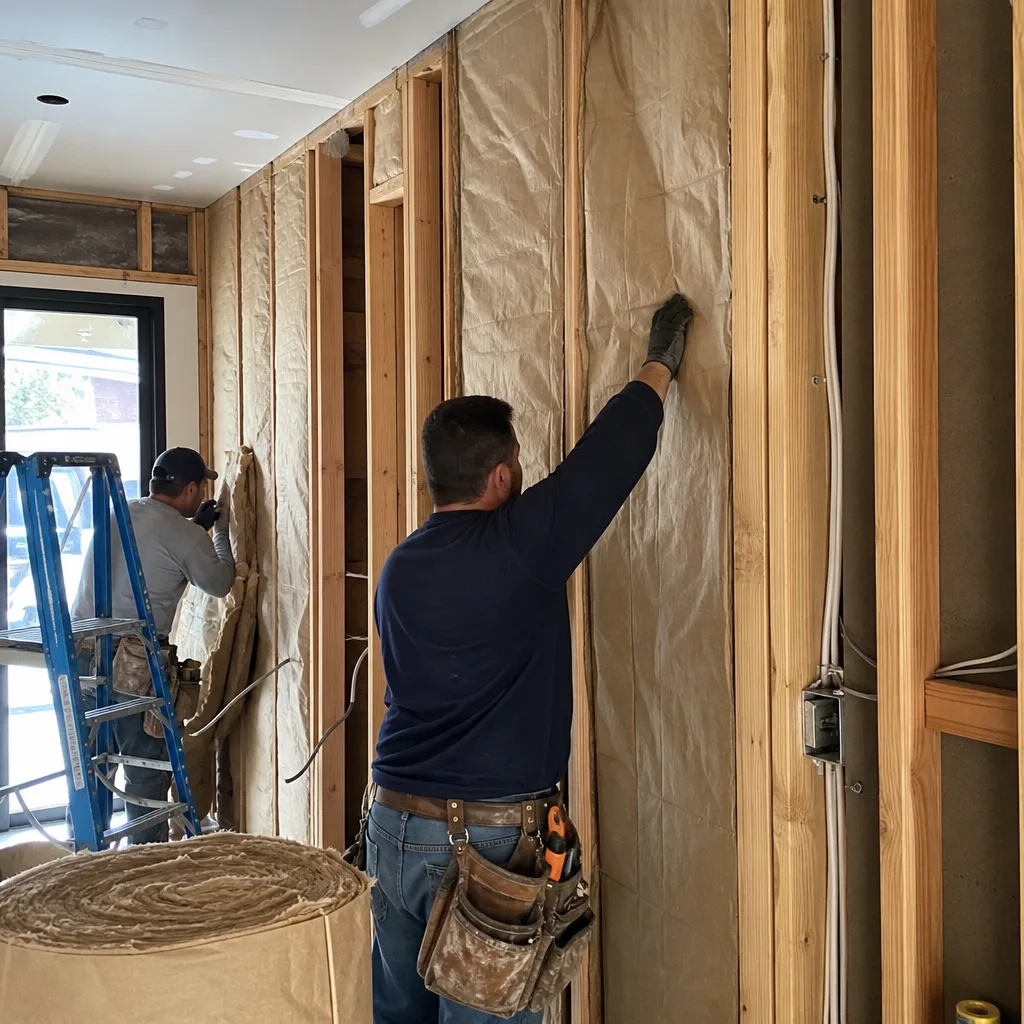
How Much Does Wall Insulation Cost in Orange, CA?
Wall insulation in Orange, CA typically costs $1.50 to $4.50 per square foot, installed, depending on the material and whether your walls are accessible or need to be opened up. Most Orange homeowners spend between $1,800 and $6,500 for a full exterior wall insulation project on a standard single-story home. Same-day estimates are free – call (657) 530-5638 and we’ll give you a number based on your actual house, not a guess from a website form.
Wall Insulation Cost Breakdown for Orange Homes (2026)
Before we get into the table, one thing worth saying plainly: the prices below reflect what we actually see in the Orange market – not national averages pulled from a database. Material costs here run slightly higher than the Inland Empire because we’re in coastal-adjacent Orange County, where labor rates and supply chain distances both factor in. That said, these are real ranges, not inflated for shock value.
| Insulation Type | Installed Cost (per sq ft) | Typical Job Total (1,500 sq ft wall area) | Best Application |
|---|---|---|---|
| Blown-In Fiberglass (retrofit, existing walls) | $1.50 – $2.50 | $2,250 – $3,750 | Older Orange homes with hollow walls and limited demo access |
| Blown-In Cellulose (retrofit, existing walls) | $1.40 – $2.25 | $2,100 – $3,375 | Cost-sensitive retrofits; good density fill through small holes |
| Fiberglass Batt (open wall, new construction/remodel) | $1.00 – $2.00 | $1,500 – $3,000 | Open-stud walls during renovation or new build |
| Mineral Wool / Rockwool Batt (open wall) | $1.75 – $3.00 | $2,625 – $4,500 | Fire separation walls, shared walls, or noise control |
| Open-Cell Spray Foam (Icynene) | $2.50 – $4.00 | $3,750 – $6,000 | Air sealing + insulation combined; conditioned space walls |
| Closed-Cell Spray Foam (Demilec) | $3.50 – $5.50 | $5,250 – $8,250 | High-moisture walls, exterior sheathing, maximum R-value per inch |
| Rigid Foam Board (exterior continuous insulation) | $2.00 – $4.00 | $3,000 – $6,000 | Reducing thermal bridging through studs on re-siding projects |
What These Numbers Include
Every price above includes labor, material, and basic prep – drilling or cutting access for retrofit methods, patching small holes for blown-in jobs, and cleanup. What they don’t include: drywall repair beyond minor patching, painting, or structural work that turns up during the job. If we open a wall and find something unexpected (and in older Orange neighborhoods like the Cypress Street area or around Old Towne, that happens), we tell you before we proceed. No surprise charges after the fact.
The Retrofit vs. Open Wall Difference
This is the single biggest cost driver in wall insulation. If your walls are already drywalled and you’re not doing a renovation, you’re in retrofit territory. Retrofit work for Wall Insulation in Orange means either drilling small access holes from the exterior or interior and blowing material in, or using dense-pack blown techniques through the cavity. It costs more per square foot than installing batts into an open stud bay during a remodel – but it avoids the cost and disruption of tearing out drywall. For most Orange homeowners who aren’t already mid-renovation, retrofit blown-in is the right call.
What Affects Wall Insulation Pricing in Orange, CA
- Access method: Retrofit blown-in through drilled holes costs more per square foot than batt installation into open studs. If your home is occupied and finished, expect retrofit pricing. If you’re already mid-remodel with studs exposed, batts or spray foam into open cavities will run less per foot – though spray foam materials cost more regardless.
- Wall construction type: Standard 2×4 stud walls (common in Orange homes built before 1990) hold less insulation by volume than 2×6 framing. A 2×4 cavity can hold R-13 fiberglass or up to R-15 with mineral wool; a 2×6 cavity gets you to R-19 or R-21. More material per cavity costs more, but the performance gain is proportional.
- Orange’s climate zone (Zone 8B) and local code: Orange County sits in IECC Climate Zone 3C to 3B depending on proximity to the coast. The City of Orange and its Title 24 requirements set minimum wall R-values – currently R-13 for 2×4 framing in most residential applications. Upgrading beyond code minimum costs more but pays back faster here because of the delta between summer afternoon highs in inland-adjacent Orange (which regularly hit 95-100°F in July and August) and the air-conditioned interior targets most households maintain.
- Wall area and layout complexity: A simple rectangular ranch in Peralta Hills prices differently than a two-story colonial with multiple bump-outs, dormers, or an attached garage wall that needs fire-rating treatment. More linear feet of wall, more corners, and interrupted cavities around electrical and plumbing all add time and material.
- Existing insulation condition: In Orange’s older housing stock – particularly homes built in the 1950s through 1970s near the historic downtown – walls are sometimes partially filled with degraded fiberglass, old cellulose that has settled and gapped, or (occasionally) vermiculite-adjacent materials that complicate removal. Pulling out failed insulation before reinstalling adds cost, but installing over degraded material guarantees you’ll underperform. We handle removal and full reinstall as part of the same job when it’s needed.
- Material choice relative to performance goals: The cheapest installed option is blown cellulose for a retrofit or fiberglass batts for an open wall. The highest-performing option, closed-cell spray foam, costs two to three times more per square foot but delivers a vapor barrier, air seal, and structural contribution in one application. The right choice depends on what problem you’re actually solving – which is exactly why we start with a home energy audit before recommending anything.
The Material Differences Worth Understanding
Most pricing pages stop at “it depends on the material.” Here’s what that actually means for an Orange homeowner.
Blown-In Fiberglass and Cellulose
Both are the default retrofit option and both work well when installed correctly. Cellulose (primarily GreenFiber in our material lineup) is denser and fills irregularly shaped cavities slightly better. It’s also made from recycled paper fiber, which some homeowners prefer. Fiberglass blown-in from Owens Corning or Johns Manville is lighter, moisture-resistant, and doesn’t settle as much over time. For most Orange homes, the performance difference between the two is small. The bigger variable is installation density – loose-fill that isn’t packed tight enough will settle and leave gaps at the top of the cavity within a few years. Dense-pack technique matters more than the brand choice.
Mineral Wool (Rockwool)
Rockwool batts cost more than fiberglass batts but offer two things fiberglass doesn’t: meaningful fire resistance (Rockwool is non-combustible) and significantly better sound attenuation. In attached homes, condos, or shared-wall situations – which you’ll find throughout the Villa Park Road corridor and in Orange’s denser residential areas – Rockwool makes sense even at the higher price. It also handles the mild moisture that can occur in walls adjacent to bathrooms or kitchens better than fiberglass.
Spray Foam: Icynene vs. Demilec
Both are in our active material inventory. Icynene is an open-cell foam: lower density, lower cost per board-foot, and a great air barrier. It’s vapor-permeable, which in Orange’s relatively dry climate is often perfectly fine for interior walls. Demilec closed-cell is denser, higher R-value per inch (around R-6.5 per inch versus R-3.7 for open-cell), and a vapor retarder. It’s the right call for exterior wall assemblies where you need maximum thermal resistance in a limited cavity depth, or when moisture management is a design priority. Closed-cell also adds measurable racking strength to the wall assembly – a minor structural benefit, but real. The cost difference is significant, so we don’t recommend closed-cell where open-cell or blown-in will do the job.
CertainTeed and Knauf Fiberglass Batts
For open-wall applications during a remodel, we stock CertainTeed and Knauf batt products alongside Owens Corning. The differences between premium batt manufacturers at equivalent R-values are modest – installation quality, proper width for the stud spacing, and absence of voids matter more than brand selection at this tier. What does matter is that we’re not buying whatever is on clearance at a supply house. Our material comes from brands that maintain consistent density and R-value across production runs.
How to Save on Wall Insulation in Orange
Saving money on insulation doesn’t mean choosing the cheapest material. More often, it means making smarter decisions about scope, timing, and available incentives. Here’s what actually moves the needle.
Combine Wall Work with an Attic Project
If your attic insulation is also due for an upgrade – which it usually is in Orange homes that haven’t been touched since the 1980s or 1990s – bundling both into one visit reduces mobilization costs. Setup, protective staging, and cleanup for a wall job take time whether we’re doing 500 square feet or 1,500. A combined attic and wall project spreads that overhead across a larger job and typically saves 10-15% compared to scheduling them separately.
Time Your Project Around Renovations
The cheapest time to insulate walls is when studs are already exposed during a remodel. If you’re planning a kitchen update, a bathroom gut, or residing the exterior, coordinate the insulation before walls close up. Batt installation into open cavities is faster and less labor-intensive than drilling and blowing into finished walls. Waiting until after the drywall goes back up costs you the efficiency advantage.
Use Available Rebates and Tax Credits
The federal 25C Residential Clean Energy Credit covers 30% of the cost of qualifying insulation improvements, up to $1,200 per year, through 2032. SoCal Gas and SCE have historically offered additional rebates for weatherization work that includes air sealing and insulation – the availability and amounts shift year to year, so check current offerings at the time of your project. We can tell you which materials in our lineup qualify for each program when we put together your estimate. A $4,000 wall insulation job with a 30% federal credit is effectively a $2,800 job when you file.
Start with a Home Energy Audit
We audit before we recommend – that’s not a slogan, it’s how we avoid selling you work you don’t need. An energy audit uses blower door testing and thermal imaging to show exactly where your home is losing conditioned air. In some Orange homes, particularly those with older window seals or uninsulated garage ceilings, wall insulation isn’t the highest-priority fix. If the audit shows your walls are actually performing adequately and your attic is the problem, that’s what we tell you. It means a smaller job today, but you spend money where it matters.
Get an Accurate Estimate Before You Budget
A lot of homeowners either overbuild their budget based on worst-case scenarios or underfund the project and then get surprised. Call us at (657) 530-5638 and we’ll schedule a free on-site estimate. We measure the actual wall area, assess the access situation, and give you a line-item number – not a range wide enough to park a car in.
Orange-Specific Factors Most Contractors Won’t Mention
Title 24 and Permit Requirements
In Orange, a wall insulation retrofit on an existing home generally doesn’t require a building permit if you’re not altering the structure – you’re adding insulation to existing cavities. However, if the project is part of a larger permitted renovation, the insulation work is inspected as part of that permit. New construction and significant additions must meet current Title 24 Part 6 energy standards, which set minimum wall assembly U-values. We stay current on Orange’s local interpretations of these standards. When permit is required, we handle the documentation correctly the first time.
Older Construction Common in Orange
Orange has a substantial number of homes built between the 1940s and 1970s. In that era, exterior walls were often framed without any insulation at all, or with minimal fiberglass that has long since degraded. The balloon framing style used in some of the oldest homes near Old Towne creates continuous cavities that run from the foundation to the roof line – which is a fire risk and an insulation challenge that requires blocking before you can properly dense-pack the wall. We’ve seen this in homes along Glassell Street and in the older residential pockets east of Chapman Avenue. Knowing it’s possible means we check for it, not discover it mid-job.
Summer Radiant Load
Orange sits far enough inland that it sees meaningful summer heat gain through south- and west-facing walls. Unlike homes closer to the coast in Newport Beach or Laguna, Orange homes in neighborhoods like Belmont and near Santiago Hills deal with afternoon solar loads that push exterior wall surfaces well above ambient air temperature. In those orientations, the effective performance of your wall insulation under real conditions differs from its rated R-value in a controlled environment. A higher-density material or a continuous exterior rigid foam layer maintains more of its rated performance under that radiant load. It’s a factor we consider when recommending material for south- and west-facing wall assemblies specifically.
FAQs: Wall Insulation Cost in Orange, CA
How much does it cost to insulate the walls of a 1,500 square foot home in Orange?
A 1,500 square foot single-story home in Orange typically has 900 to 1,200 square feet of exterior wall cavity area (accounting for windows, doors, and corners). At blown-in retrofit pricing of $1.50 to $2.50 per square foot, expect to pay $1,350 to $3,000. If you’re using spray foam or the project involves more complex access, the range climbs to $3,500 to $6,500 for the same footprint. Call (657) 530-5638 for a free estimate based on your actual layout – the range narrows considerably once we measure the real wall area.
Is blown-in or spray foam better for existing walls in Orange?
For most Orange retrofit situations, blown-in insulation is the right call – it costs $1.40 to $2.50 per square foot installed versus $2.50 to $5.50 for spray foam, and it fills wall cavities effectively without requiring major demo. Spray foam is worth the premium when you need a combined air barrier and vapor retarder in the same application, or when cavity depth is too shallow for blown material to reach target R-values. We make that determination based on the wall assembly and your performance goals, not based on which product has a higher margin. Our audit-first process means we’re not guessing.
Does wall insulation really reduce energy bills in Orange’s climate?
Yes, particularly in homes with uninsulated or under-insulated exterior walls. In Orange’s climate, the biggest energy impact from wall insulation shows up in summer air conditioning loads. Homes with no wall insulation in the south- and west-facing assemblies can see HVAC runtime reductions of 15-25% after a full exterior wall retrofit – which, depending on your current utility spend with SoCal Edison, can translate to meaningful annual savings. The exact number depends on your home’s current condition, orientation, and HVAC efficiency, which is another reason the energy audit matters before we quote the job.
Do I need a permit for wall insulation in Orange, CA?
For a standalone insulation retrofit on an existing finished wall – where no structural work is done and the project is purely adding or replacing insulation material – a building permit is generally not required in the City of Orange. If the insulation is part of a larger permitted remodel, it falls under that permit’s inspection scope. For new construction or major additions, Title 24 Part 6 compliance is required and the insulation values will be inspected. We’ll tell you upfront what applies to your specific project before any work starts.
How long does wall insulation last in an Orange home?
Properly installed wall insulation has a useful life of 20 to 80 years depending on material. Fiberglass batts and blown fiberglass don’t degrade significantly in a sealed wall cavity if moisture stays out – they can last the life of the home. Cellulose can settle over decades and may need top-up in some retrofit situations. Spray foam (open-cell or closed-cell) is essentially permanent once cured. The main reason insulation needs replacement is moisture intrusion or pest activity – both of which we assess during the initial walkthrough. If either is present, addressing the source before installing new material is non-negotiable, or you’ll be doing the job again in five years.
Key Takeaways
- Wall insulation in Orange runs $1.40 to $5.50 per square foot installed, with most retrofit projects landing between $1,800 and $6,500 total.
- Retrofit blown-in (fiberglass or cellulose) is the most cost-effective option for finished walls; spray foam is justified when air sealing and vapor control are part of the goal.
- The federal 25C tax credit covers 30% of qualifying insulation costs – meaningful on a $3,000 to $6,000 job.
- Orange’s older housing stock (1940s to 1970s construction) often has no wall insulation at all, making it a high-return investment compared to homes that simply need an upgrade from R-11 to R-15.
- South- and west-facing walls in Orange’s climate bear a higher radiant load than coastal neighbors – material selection for those orientations isn’t a one-size answer.
- We audit before we recommend. If the wall isn’t the problem, we’ll tell you that before you spend a dollar on it.
- The owner installs it – every time. No subcontractors, no handoffs, no guessing who showed up to do the work.
Ready to Get an Accurate Number for Your Home?
Pricing guides give you a range to work with. What they can’t give you is the number specific to your walls, your access situation, your existing conditions, and your performance goals. That’s what the free on-site estimate is for. We’ll come to your Orange home, measure the actual wall area, assess what’s in the cavities now, and tell you exactly what we’d recommend and what it costs – no upsell, no pressure to sign that day.
Harbor Insulation Orange serves homeowners throughout Orange, CA and the surrounding area. The owner performs the installation on every job. We stock materials from Owens Corning, Johns Manville, Knauf, Rockwool, CertainTeed, Icynene, Demilec, and GreenFiber – so the recommendation is based on what fits your project, not what’s sitting in the truck.
Call (657) 530-5638 to schedule your free wall insulation estimate in Orange. We’re ready when you are.
Pricing reflects the Orange, CA market as of 2026. Harbor Insulation Orange offers free estimates – call (657) 530-5638.
Written by the Owner & Lead Installer at Harbor Insulation Orange, serving Orange, CA.
What Our Customers Say
"Spray foam in the rim joists in the basement. The cold floors above them are gone."
— Lamont Jackson"Solid job. It's hard to verify what's up there once they've gone, so I'd suggest asking for photos, which they did provide when I asked but didn't offer."
— Oscar Guzman"Installed baffles at the soffits so the new insulation didn't block the ventilation, which the previous contractor apparently never considered."
— Jodi Vaughn